Ha Long Bay is one of Vietnam’s most renowned natural heritage sites and has been recognized among the world’s top seven new natural wonders. For this reason, when speaking of Ha Long tourism, it is impossible to overlook this breathtaking bay and the countless memorable experiences it offers.
1. Introduction to Ha Long Bay
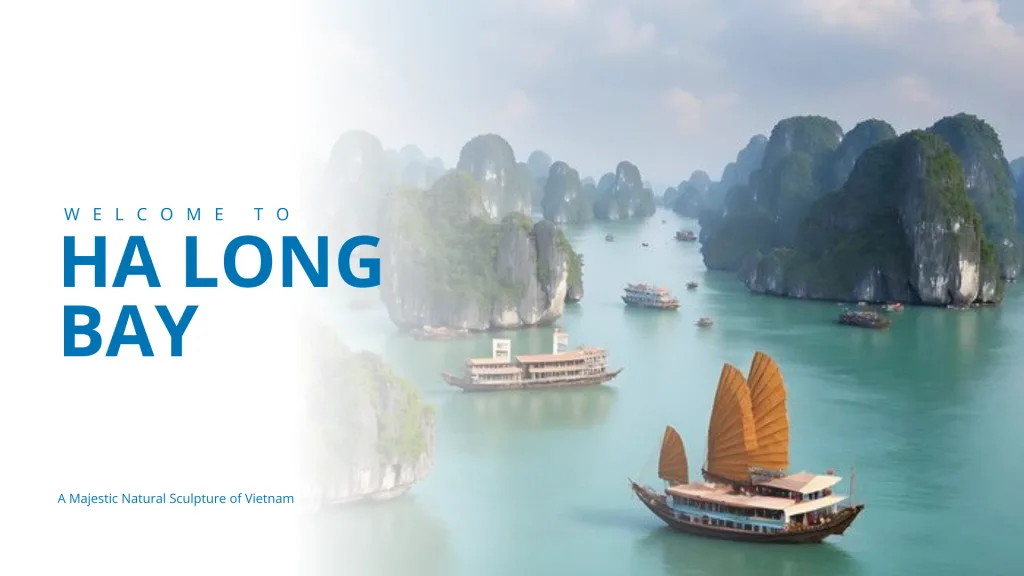
Ha Long Bay is located in northeastern Vietnam, where the western part of the Gulf of Tonkin meets the southwestern boundary of Cat Ba Island. The bay’s beauty resembles a vibrant, multi-colored painting, with every contour and formation harmoniously shaped by nature.
Ha Long Bay has been recognized as one of the ten most beautiful bays in the world. It represents a remarkable combination of vast skies and the boundless expanse of water. Scattered across the bay are thousands of limestone islands, many of which conceal caves filled with extraordinary shapes and formations. These islands follow one another endlessly, each sculpted differently by nature, creating a landscape that continues to captivate visitors.
With its countless limestone islands of striking and unusual forms set against the deep blue sea, Ha Long Bay has become one of the most famous destinations not only in Vietnam but also worldwide.
2. The Beauty of Ha Long Bay
Ha Long Bay covers a total natural area of more than 1,500 square kilometers and is home to nearly 2,000 islands of various sizes, forming an exceptionally magnificent seascape. Within this island system lie famous caves known for their colors and stalactite formations, such as Dau Go Cave, Bo Nau Cave, Trinh Nu Cave, and Sung Sot Cave.
Thanks to its unique values, Ha Long Bay has been recognized twice by UNESCO as a World Natural Heritage Site. The recognition is based not only on its outstanding aesthetic beauty but also on its significant geological and geomorphological value, which plays an important role in the development of local tourism. In 2011, Ha Long Bay was once again honored as one of the world’s seven new natural wonders, reaffirming the beauty and global value of Vietnam’s natural landscapes. Following these prestigious titles, Ha Long Bay has become widely known among international visitors and is considered the most attractive destination in Vietnamese tourism.
3. The Island Complex of Ha Long Bay
The island system in Ha Long Bay consists mainly of two types: limestone islands and shale islands. These islands are concentrated in two primary areas: the southeastern region of Bai Tu Long Bay and the southwestern region of Ha Long Bay. According to current statistics, out of 1,969 islands in Ha Long Bay, approximately 1,921 are limestone islands, most of which reach heights of around 200 meters.
Geological research indicates that Ha Long Bay’s formation dates back approximately 250 to 280 million years ago. The bay was created through tectonic movements involving the uplift and subsidence of continental plates, which transformed land areas into marine depressions. Over millions of years, karst erosion and weathering processes shaped Ha Long Bay into a truly unique landscape with distinctive geological features.
The area where limestone islands are most densely concentrated, featuring remarkable scenery and numerous beautiful caves, lies in the core zone of Ha Long Bay, extending into parts of Bai Tu Long Bay and Lan Ha Bay. This region has become the foundation for tourism development in the coal-mining region, creating an irresistible attraction for visitors.
Although Ha Long Bay contains a vast number of islands, no two islands are alike. From a distance, visitors can see limestone islands stacked upon one another, forming striking arrangements. In some places, islands are aligned both vertically and horizontally, stretching for dozens of kilometers like a massive natural fortress.
Each island has its own unique shape, creating distinctive and vivid impressions found only in Ha Long Bay. Based on these shapes and human imagination, many islands have been given familiar and descriptive names such as Dau Nguoi Island (Human Head Island), Trong Mai Islet (Fighting Cocks Islet), Rong Islet (Dragon Islet), Ong Su Islet, and Dua Islet (Chopsticks Islet).
In addition, some islands are named after folk legends or notable features, including Bai Tho Mountain, Trinh Nu Cave, Tuan Chau Island, and uniquely characterized islands such as Ngoc Vung Island, Kien Vang Islet, and Monkey Island.
Fighting Cocks Islet (Hon Ga Choi)
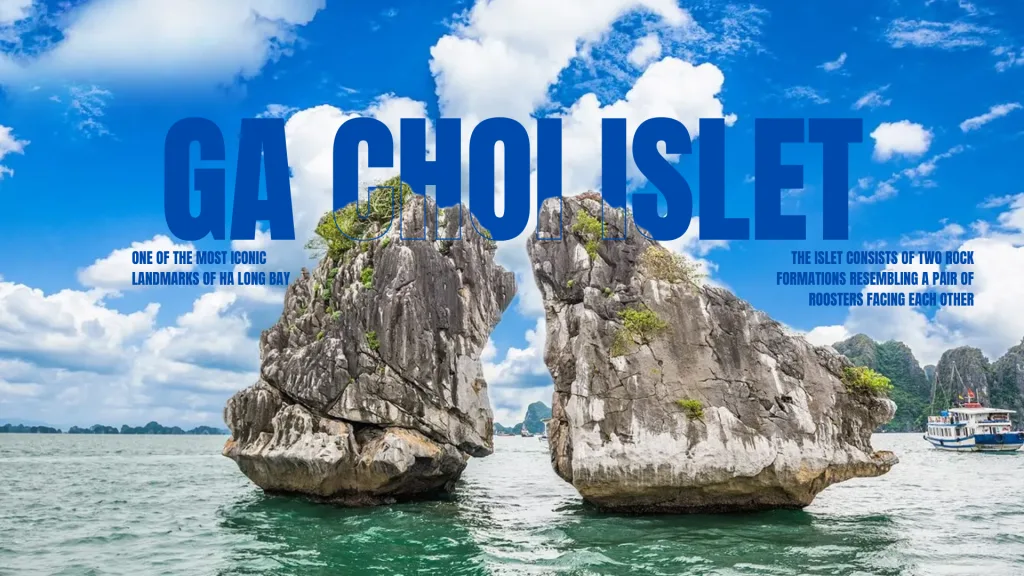
Fighting Cocks Islet, also known as Trong Mai Islet, is one of the most iconic landmarks of Ha Long Bay. It is located near Dinh Huong Islet, approximately 5 kilometers from Bai Chay Port. The islet consists of two rock formations resembling a pair of roosters facing each other. Each formation stands over 10 meters high, with narrow bases that create a striking and seemingly precarious balance above the vast sea.
Ngoc Vung Island
Ngoc Vung Island lies more than 34 kilometers from the tourist boat harbor and belongs to Van Don District in Quang Ninh Province. The island is surrounded by many beautiful beaches and features Van Xuan Mountain, which rises to 182 meters. It also contains an archaeological site covering 45,000 square meters with significant historical value.
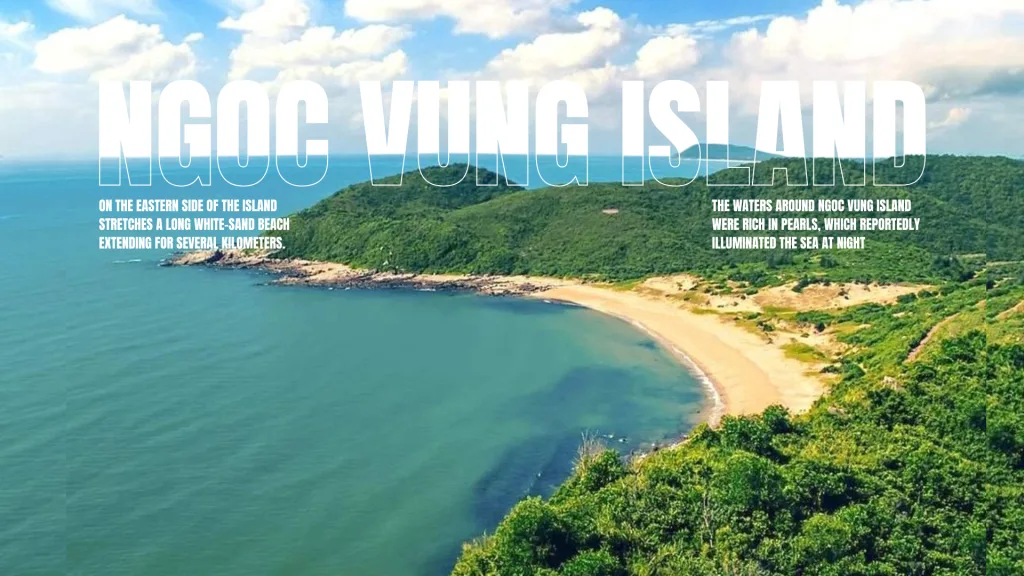
Ngoc Vung Island has a total area of 12 square kilometers and is part of the ancient Van Don trading port system, established in the 11th century. On the eastern side of the island stretches a long white-sand beach extending for several kilometers.
In the past, the waters around Ngoc Vung Island were rich in pearls, which reportedly illuminated the sea at night. This phenomenon gave rise to the island’s name, meaning “glowing pearl.” Historically, local residents relied mainly on fishing and pearl harvesting. Today, pearl farming has become more developed, and fewer residents venture out to sea.
Titop Island
Titop Island was formerly known as Cat Nang Islet during the French colonial period. It is located about 14 kilometers east of Bai Chay within Ha Long Bay. On January 22, 1962, President Ho Chi Minh visited the island together with Soviet cosmonaut Gherman Stepanovich Titov. To commemorate this visit, President Ho Chi Minh named the island Titop.
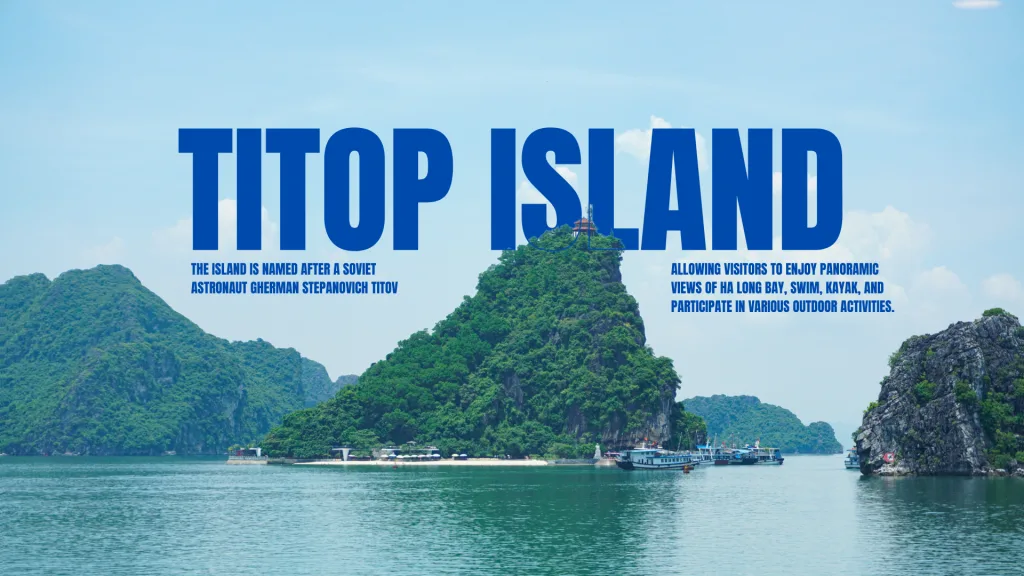
Titop Island is characterized by steep slopes and a flat white-sand beach shaped like a crescent moon embracing the foot of the island. Many tour programs, especially cruise tours, stop here, allowing visitors to enjoy panoramic views of Ha Long Bay, swim, kayak, and participate in various outdoor activities.
Soi Sim Island
Located in the southwestern part of Ha Long Bay and only about 700 meters from Titop Island, Soi Sim Island is a relatively new destination that has gradually won visitors’ favor thanks to its pristine beauty, tranquility, and distinctive ecosystem formed over hundreds of millions of years.
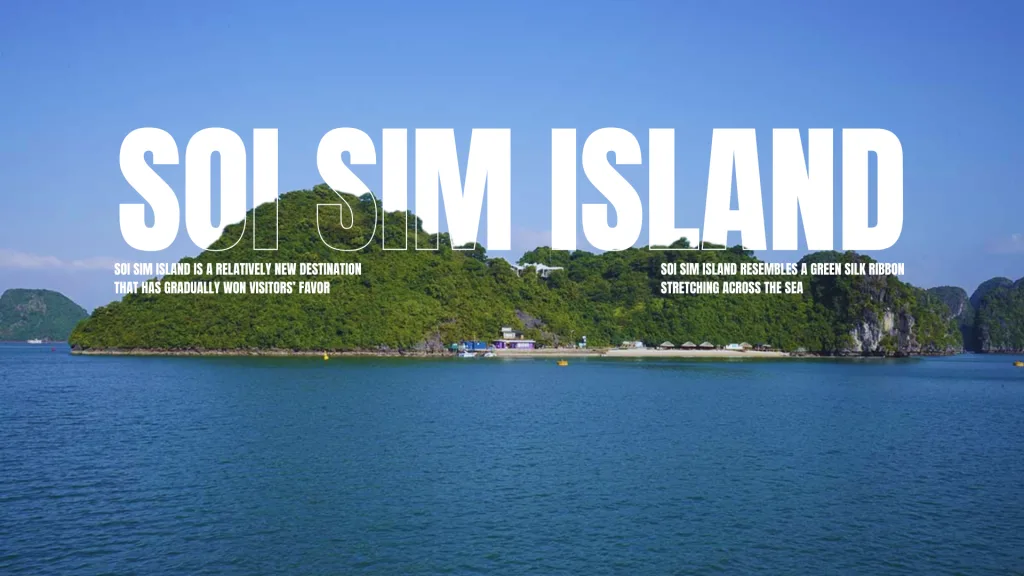
Covering an area of approximately 8.7 hectares, the island is composed mainly of weathered feralit soil and is almost entirely covered by natural myrtle forests. With two peaks rising to about 100 meters connected by a small valley, Soi Sim Island resembles a green silk ribbon stretching across the sea, offering peaceful and poetic views from every angle.
Unlike more crowded destinations, Soi Sim Island maintains a rare sense of calm. Its beach is clear, clean, and minimally affected by human activity. Visitors can relax in the cool waters and enjoy fresh seafood caught and prepared by local fishermen directly on the island.
Currently, Soi Sim Island is being planned for development as a sustainable ecotourism area that harmoniously combines leisure, experience, and nature conservation.
Bo Hon Island
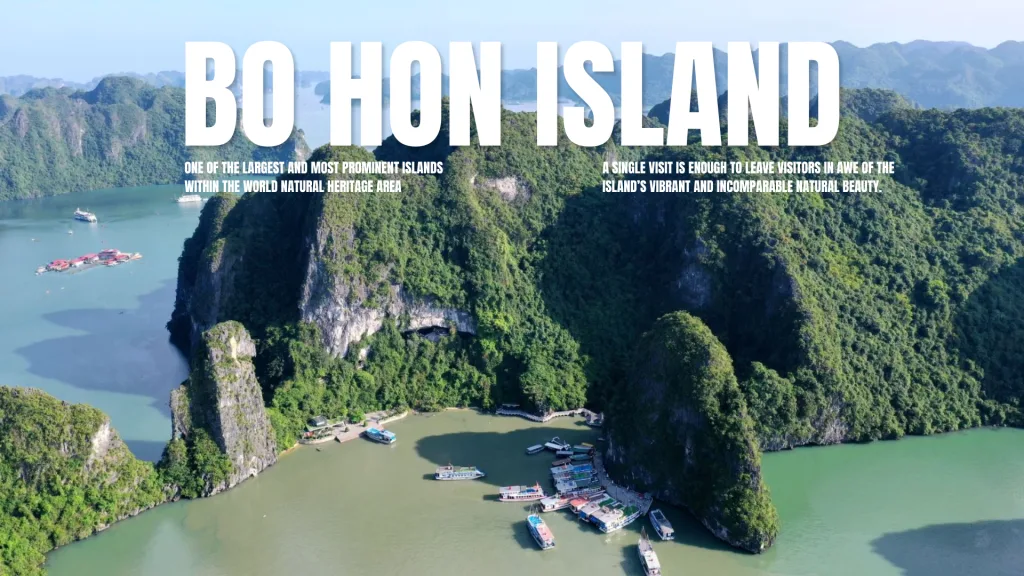
Situated at the heart of Ha Long Bay, Bo Hon Island is one of the largest and most prominent islands within the World Natural Heritage area. It is located about 10 kilometers from Ha Long International Cruise Port and 12 kilometers from Tuan Chau Port, making it an ideal destination for nature lovers and explorers.
With an area of 3.8 square kilometers and a peak nearly 190 meters high, the island features a spectacular cave system along the famous sightseeing route No. 2. Highlights include:
• Sung Sot Cave, often described as a magnificent “underground palace”
• Luon Cave, where visitors can kayak through rocky arches
• Trinh Nu Cave and Trong Cave, associated with a touching love legend
• Tien Ong Lake, a tranquil body of clear water hidden within the mountains
Bo Hon Island is valued not only for its scenery but also for its diverse ecosystem. Towering limestone cliffs shelter forests of valuable plant species such as fig trees, orchids, and cycads, as well as wildlife including monkeys, deer, and mountain goats. A single visit is enough to leave visitors in awe of the island’s vibrant and incomparable natural beauty.
Reu Island (Monkey Island)
Located only about 600 meters from Bai Chay, Reu Island was once known as a breeding and research center for monkeys operated by the Ministry of Health. This history led to its popular nickname, Monkey Island.

Today, the island has taken on a new appearance, having been developed into a high-end resort area by Vinpearl. Thanks to its convenient location, visitors staying on Reu Island can easily combine their trip with visits to Sun World Ha Long, Bai Chay Bridge, or Tuan Chau Island within just a few minutes.
Tuan Chau Island
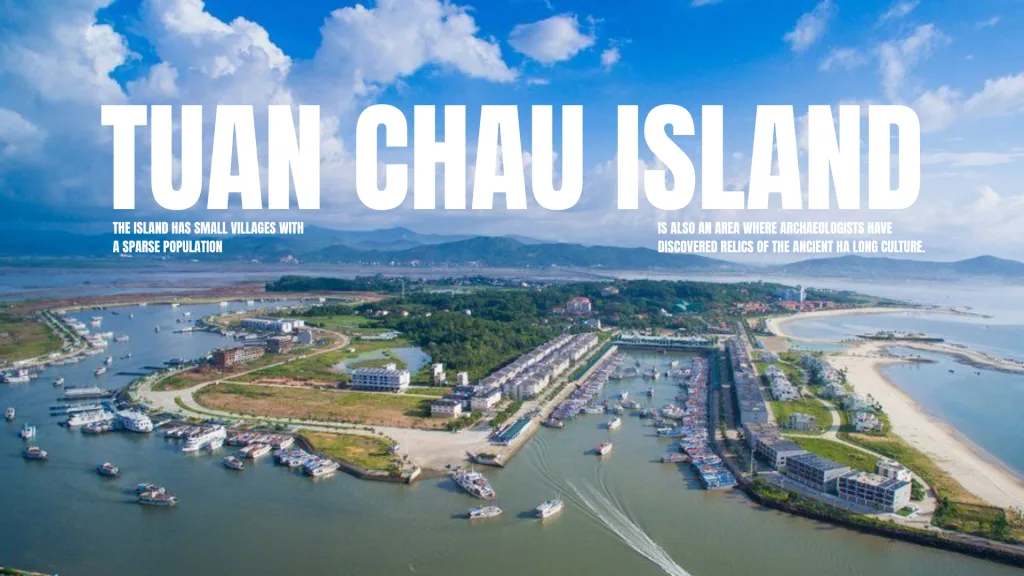
Tuan Chau Island covers an area of approximately 3 square kilometers and is located close to the mainland in the southwestern part of Ha Long Bay. The island has small villages with a sparse population and is also an area where archaeologists have discovered relics of the ancient Ha Long culture.
Since 2001, Quang Ninh Province has built a major road connecting the island to the mainland, transforming it into a comprehensive tourism and entertainment complex with hotels, restaurants, and beaches. From that point onward, Tuan Chau Island has experienced rapid development and transformation, becoming the central hub of Ha Long tourism with well-planned and large-scale investments.
Ha Long Bay is not only a place to admire the magnificent beauty of nature but also a space where people can reconnect with the natural world – where stone, water, and sky merge to create an eternal symphony honoring the splendor of nature. With such extraordinary scenery and value, there is no reason to hesitate before preparing for a journey to experience Ha Long Bay firsthand.