Discover six iconic Hanoi dishes recognized as national intangible cultural heritage, each reflecting the city’s history and culinary tradition.
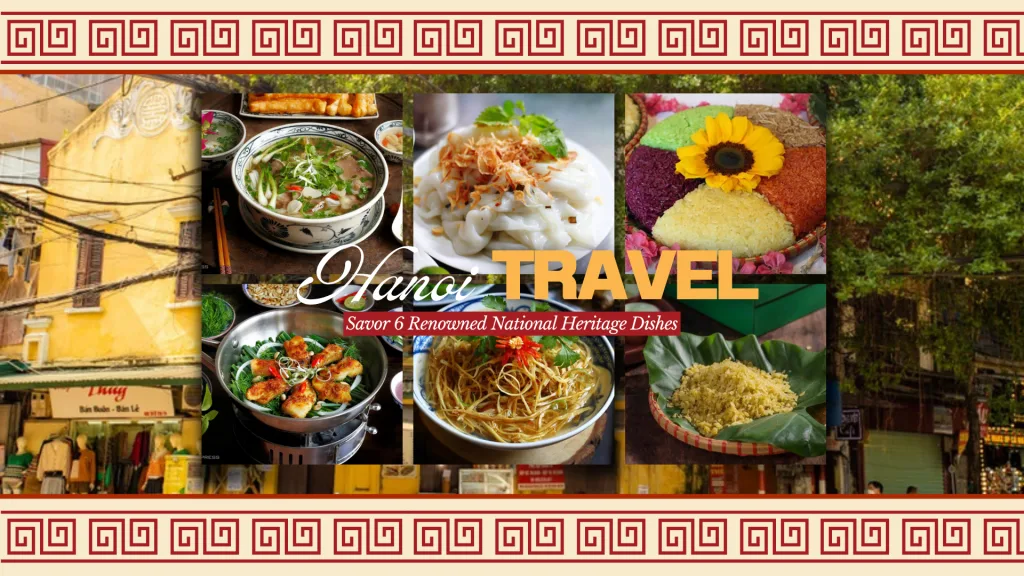
When visiting Hanoi, you should not miss the opportunity to try six dishes officially recognized as National Intangible Cultural Heritage. Each dish represents a refined blend of culture and history, closely tied to the daily life of people in this thousand-year-old capital.
1. Hanoi Pho – The Essence of Vietnamese Cuisine
It is no exaggeration to say that pho is a symbol of Vietnamese cuisine. Its clear, delicately sweet broth is simmered from bones, paired with soft rice noodles and thinly sliced beef, then finished with scallions and fresh herbs to create a harmonious and captivating flavor.
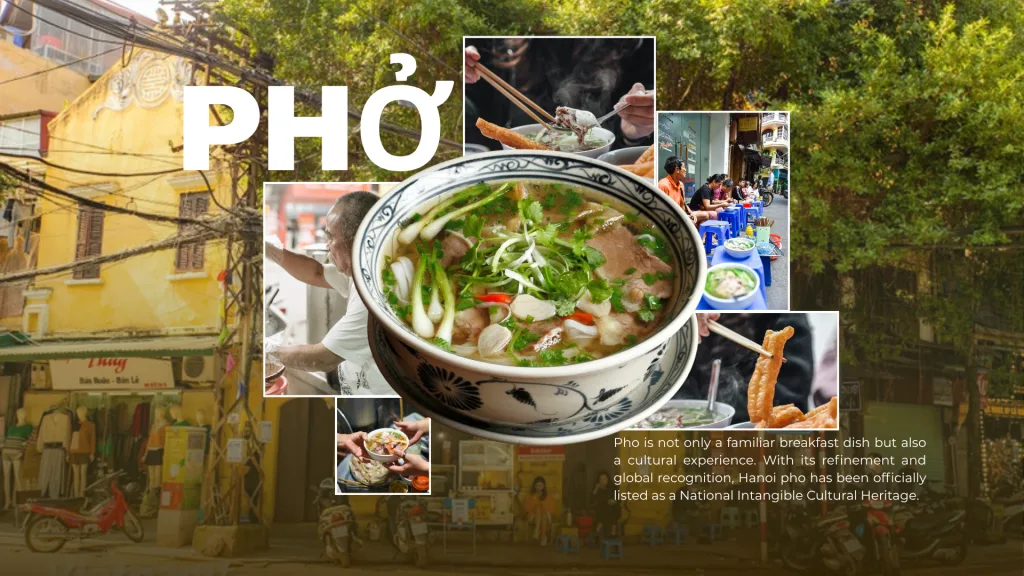
Pho is not only a familiar breakfast dish but also a cultural experience. With its refinement and global recognition, Hanoi pho has been officially listed as a National Intangible Cultural Heritage.
2. Thanh Tri Steamed Rice Rolls – Elegance in Simplicity
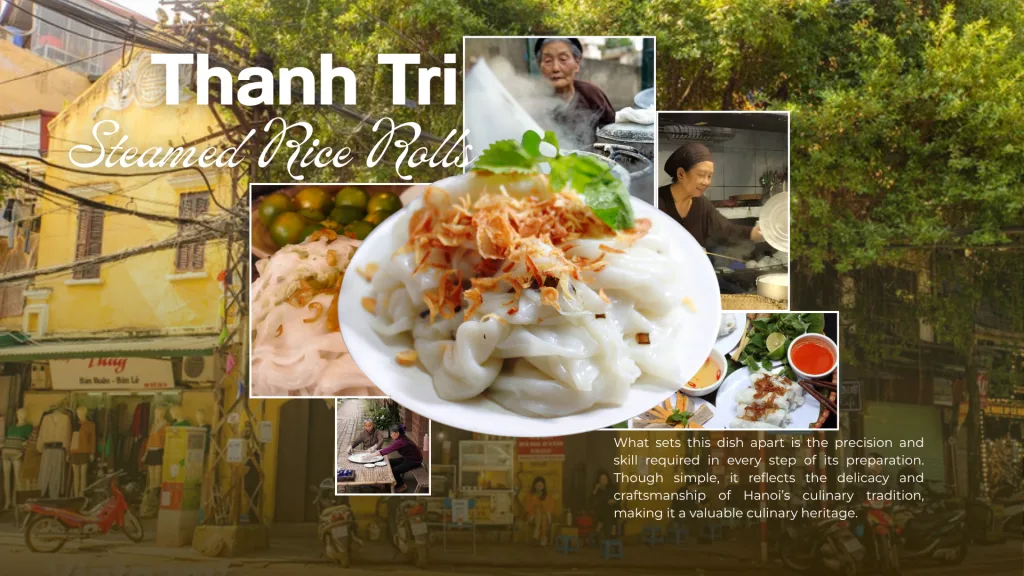
Thanh Tri steamed rice rolls are known for their extremely thin and silky texture, carefully prepared by hand over a steaming pot. They are typically served with crispy fried shallots, dipped in a light sweet-and-sour fish sauce, and accompanied by cinnamon pork sausage or pork meatballs.
What sets this dish apart is the precision and skill required in every step of its preparation. Though simple, it reflects the delicacy and craftsmanship of Hanoi’s culinary tradition, making it a valuable culinary heritage. Visitors to Hanoi should not miss this dish.
3. Cha Ca La Vong – A Century-Old Flavor of the Capital
Cha Ca La Vong has been associated with Hanoi for more than a century. Fresh catfish is marinated with galangal, turmeric, and fermented rice, then grilled over charcoal. At the table, the fish is stir-fried with dill and fresh scallions in a hot pan.
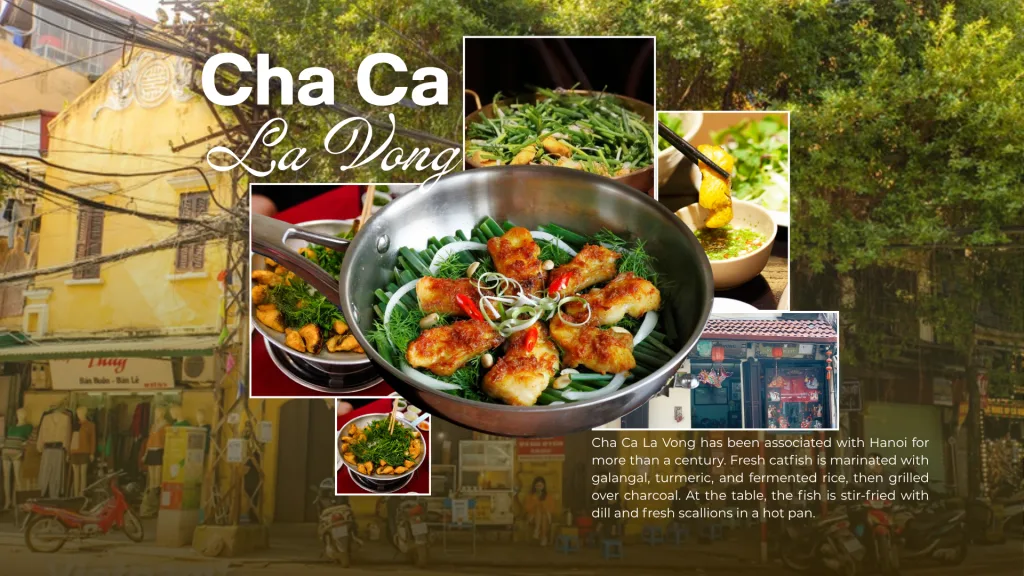
It is then mixed with vermicelli noodles, fresh herbs, roasted peanuts, and shrimp paste sauce before being enjoyed, creating a distinctive and memorable flavor.
4. Bat Trang Village Feast – A Gathering of Culinary Traditions
Bat Trang is widely known for its traditional pottery craft, but it also preserves the art of preparing traditional ceremonial feasts. A Bat Trang feast typically includes a variety of dishes such as sticky rice, sweet soups, pork sausage, salads, and spring rolls, all beautifully arranged on finely crafted ceramic plates and bowls.
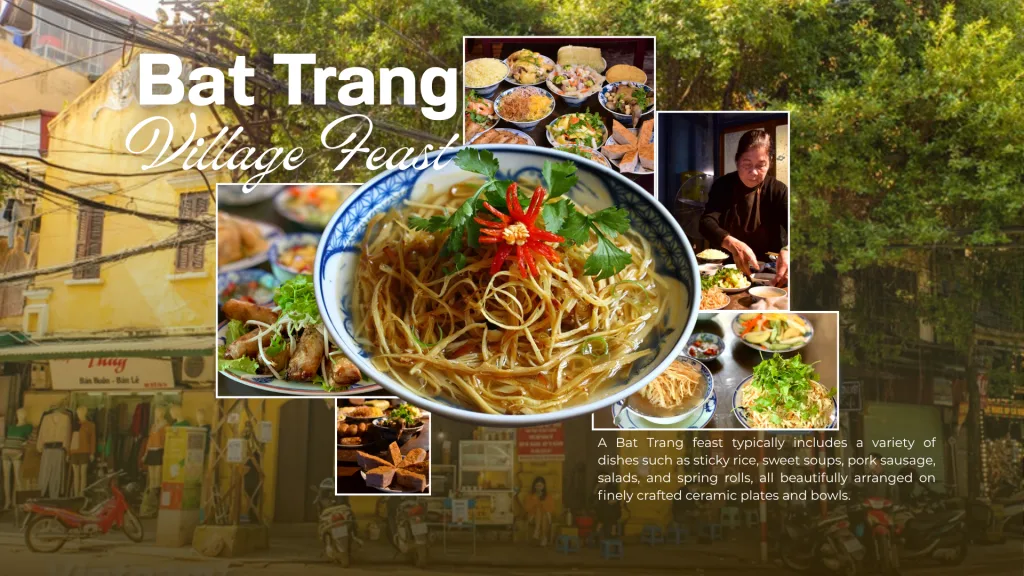
More than just a meal, the Bat Trang village feast represents community connection and a deep respect for traditional crafts. A trip to Hanoi would not be complete without visiting Bat Trang to explore and experience this culinary tradition.
5. Phu Thuong Sticky Rice – A Treasure of Thang Long
Phu Thuong sticky rice is made from “nep cai hoa vang,” a premium variety of glutinous rice known for its fragrance and quality. Local residents still use traditional bamboo steamers, producing grains that are glossy, soft, and sticky without becoming mushy.
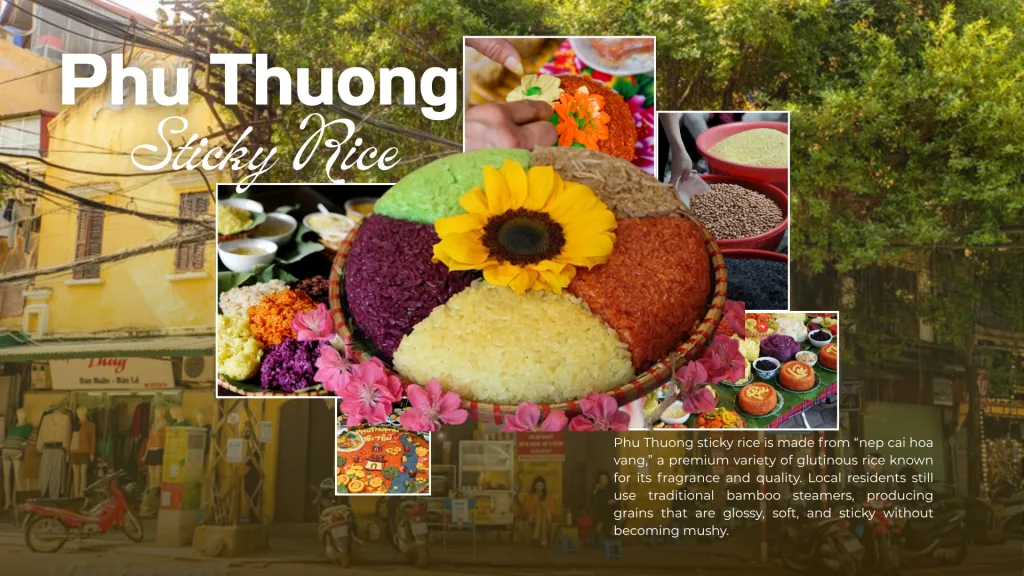
This simple dish is often served with sesame salt, braised pork, or cinnamon sausage. It is not only a common breakfast food in Hanoi but also a cherished part of the long-standing traditions of Phu Thuong village.
6. Me Tri Green Rice Flakes – The Flavor of Hanoi Autumn
No mention of Hanoi’s autumn is complete without Me Tri green rice flakes. Young rice grains are carefully roasted and pounded to create soft, fragrant flakes, traditionally wrapped in green lotus leaves.
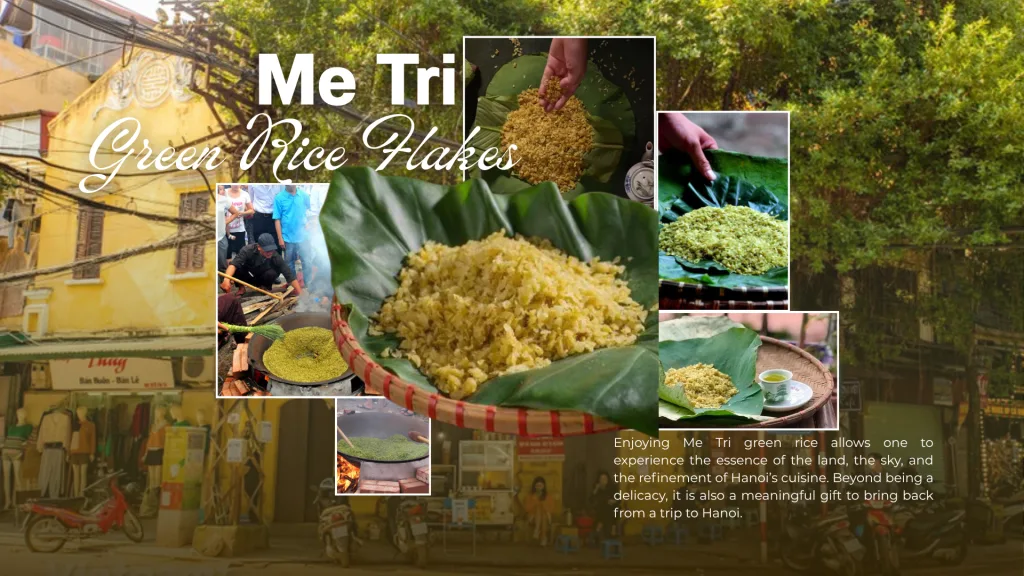
Enjoying Me Tri green rice allows one to experience the essence of the land, the sky, and the refinement of Hanoi’s cuisine. Beyond being a delicacy, it is also a meaningful gift to bring back from a trip to Hanoi.