Discover the history, architecture, and cultural significance of Hoi An’s Japanese Bridge, a symbolic landmark of the ancient town.
The Japanese Bridge in Hoi An is widely recognized as a symbolic landmark of the ancient town. It leaves a lasting impression thanks to its distinctive Japanese-style architecture. Notably, this site is also featured on Vietnamese currency.
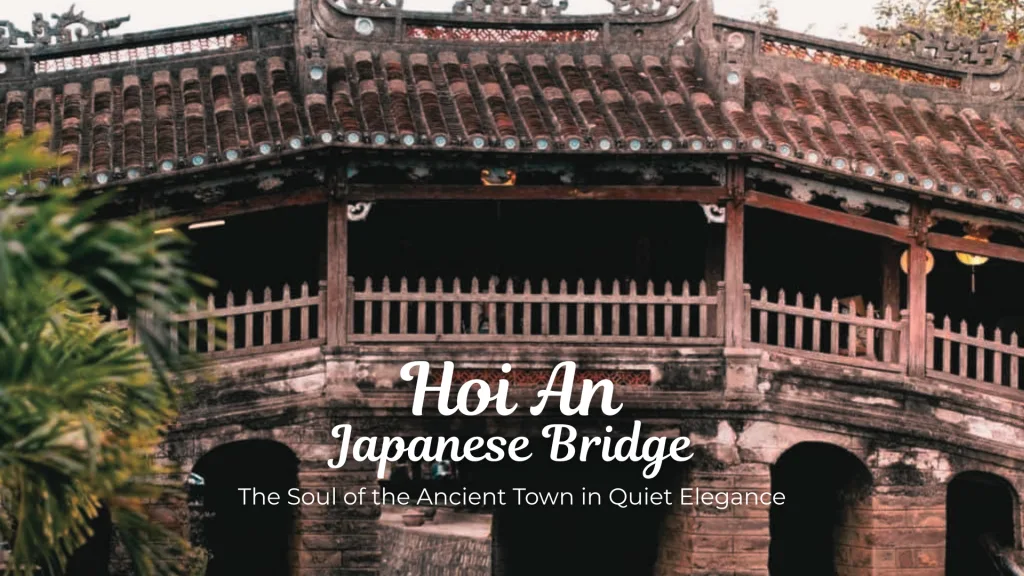
Often regarded as a highlight of Hoi An tourism, the Japanese Bridge stands out for its calm and nostalgic atmosphere. Over time, it has witnessed numerous historical changes and events. Perhaps for this reason, it has become an essential stop, attracting thousands of visitors each year.
1. History of the Japanese Bridge in Hoi An
Contents
The Japanese Bridge is located on Nguyen Thi Minh Khai Street, Hoi An Ward, Da Nang City. Anyone visiting this site is struck by its dignified appearance, which reflects a deep sense of history. It also embodies the beliefs and hopes of the local community.
The bridge was built in the 17th century with contributions from Japanese merchants. It is associated with the legend of a giant creature named Namazu. According to the story, its head lies in India, its body in Vietnam, and its tail in Japan. Whenever the creature moved, it would cause floods and earthquakes.
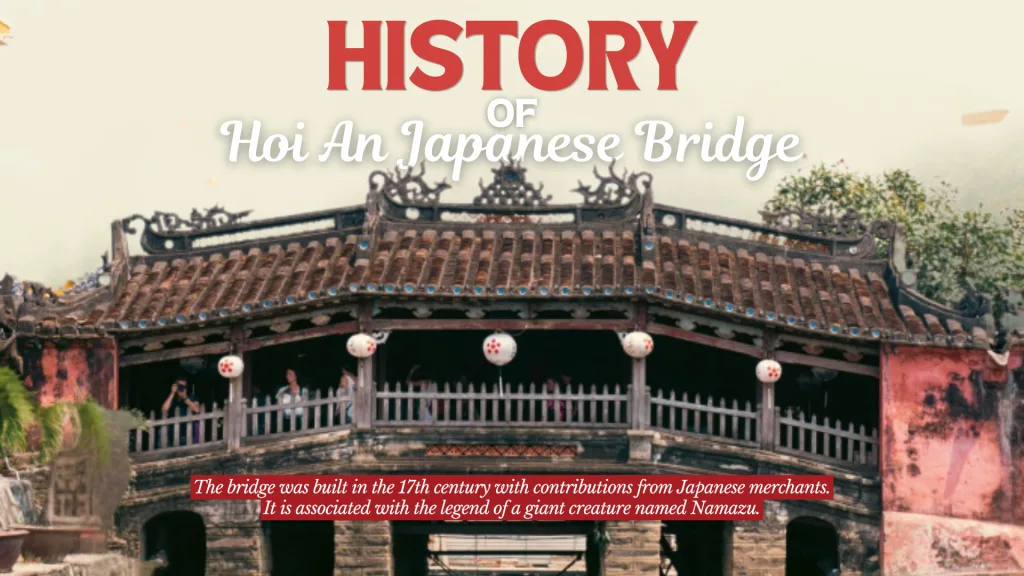
The bridge was constructed as a symbolic sword placed across the creature’s back, preventing it from moving and disrupting human life. As a result, the three countries would remain peaceful and prosperous.
The bridge is also known as the Japanese Bridge or Lai Vien Bridge. These names stem from its strong Japanese architectural influence. In 1719, Lord Nguyen Phuc Chu visited Hoi An and gave it the name “Lai Vien Kieu,” meaning “Bridge to Welcome Distant Guests.”
For this reason, visitors to Hoi An should not miss this destination. It offers not only memorable photo opportunities but also a meaningful travel experience.
2. The Japanese Bridge – A Symbol of Hoi An
Historically, the Japanese Bridge area was a bustling hub of trade. Commercial activities extended beyond domestic exchanges to include foreign merchants. It also served as a place where Southeast Asian and East Asian cultures intersected.
2.1. Architecture with Strong Japanese Influence
The Japanese Bridge in Hoi An measures approximately 18 meters in length and features a covered structure. It spans a small branch of the Thu Bon River, contributing to its tranquil appearance. The structure is made of wood, with a house-like structure above and a bridge below, supported by stone pillars.

Its architecture clearly reflects Japanese design, particularly the gracefully curved roof that covers the entire bridge. At the main entrance hangs a large plaque engraved with the three Chinese characters “Lai Vien Kieu.” The temple section is separated from the bridge by a wooden partition and traditional panel doors, creating a distinctive spatial layout.
Another notable feature is the pair of animal statues standing guard at both ends of the bridge. These are statues of a dog and a monkey, symbolizing solemnity and protection. They also mark the timeline of construction, which began in the Year of the Monkey and was completed in the Year of the Dog.
2.2. A Site Closely Linked to Local Life
The Japanese Bridge has long been part of daily life for Hoi An residents. It helps regulate foot traffic and provides convenient passage within the ancient town. More importantly, it serves as a place of spiritual significance, associated with beliefs in controlling water spirits and preventing natural disasters.

Although the bridge has undergone several restorations, it has retained its original ancient charm. On February 17, 1990, it was officially recognized as a National Historical and Cultural Heritage Site. Visiting the interior of the Japanese Bridge is therefore considered a meaningful experience that travelers should not miss.
2.3. A Temple That Does Not Worship Buddha

Unlike many traditional temples, the Japanese Bridge does not worship Buddha. Instead, it is dedicated to Bac De Tran Vo, a guardian deity believed to bring joy and happiness to people. As a result, both locals and visitors frequently come here to pray for good fortune and blessings.
3. Notes for Visiting the Japanese Bridge in Hoi An
To ensure a smooth and enjoyable visit, travelers should keep the following points in mind:
Visitors are required to purchase a ticket to access this cultural heritage site. The entrance fee is 80,000 VND per person for Vietnamese visitors and 150,000 VND per person for foreign visitors. This ticket also includes access to 21 attractions within the ancient town, including the Japanese Bridge.
In addition to sightseeing, visitors can participate in traditional folk games. Street performances are held daily from 7:00 PM to 8:30 PM in the old town.
Hiring a tour guide is recommended for a deeper understanding of the site. Guides can provide detailed information about the bridge’s location, historical stories, and unique architectural features.
The best times to visit are around 9:00 AM or between 2:00 PM and 3:00 PM, when the area is less crowded.
As a spiritual site, visitors should behave respectfully. Avoid pushing or making noise; instead, move quietly and observe respectfully to show reverence and maintain proper conduct.
The Japanese Bridge in Hoi An is a unique destination well worth visiting. It offers insight into history and allows visitors to experience the nostalgic beauty of the past amid modern life. Such a visit can deepen appreciation for the present and the cultural heritage that continues to endure.