Discover the Hung Kings Temple Festival in Phu Tho, one of Vietnam’s most important cultural events honoring the nation’s legendary founders.
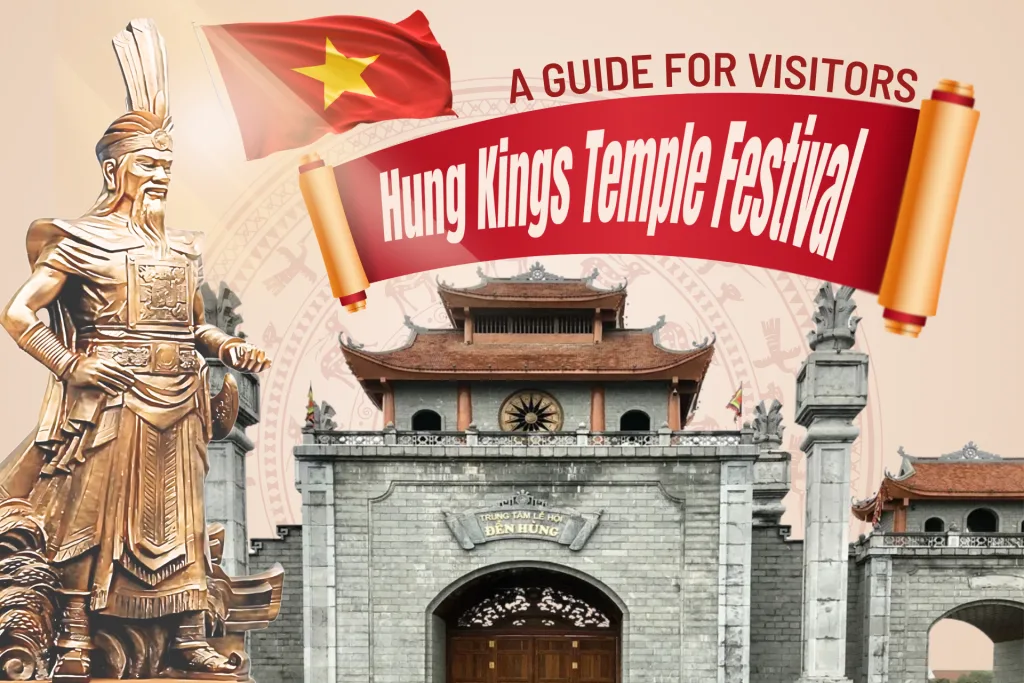
The Vietnamese have a long-standing belief expressed in the saying: “Trees have roots, and people have their origins.” This idea reflects a core cultural value of remembering one’s ancestors. For this reason, the Hung Kings Temple Festival is considered one of the country’s most significant cultural events. During the festival, thousands of people from across Vietnam travel to the Hung Kings Temple to take part in activities that commemorate and honor the Hung Kings, the legendary founders of the Vietnamese nation.
1. Introduction to the Hung Kings Temple Festival
Contents
History
Historical records dating back to several dynasties – including the Dinh, Early Le, Ly, Tran, and Later Le periods – note that these royal courts all maintained incense offerings and rituals at Hung Kings Temple. The anniversary of the Hung Kings’ death was regarded by feudal dynasties as a national ceremonial day.
The royal court assigned local residents to protect the temple, maintain the site, and conduct annual commemorative rituals. In return, the community responsible for the temple was exempted from certain obligations such as land taxes, corvée labor, and military conscription.
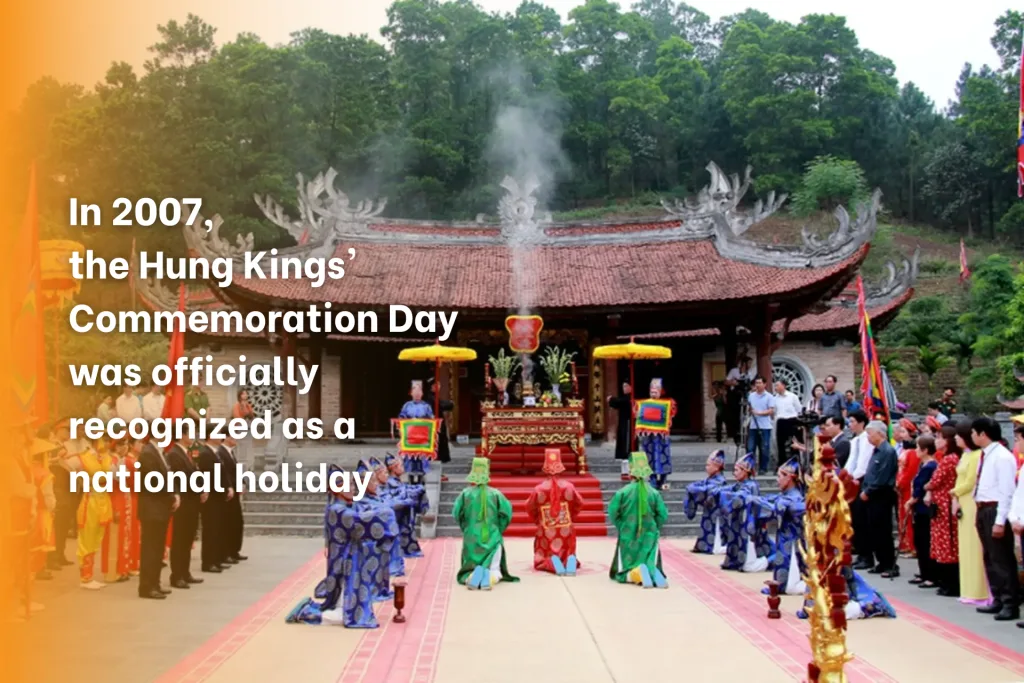
In the early 20th century, during the reign of Emperor Khai Dinh, the 10th day of the third lunar month was officially designated as the Hung Kings’ Commemoration Day. On this day, court officials were required to wear ceremonial attire and conduct offerings at the temple.
In 2007, the Hung Kings’ Commemoration Day was officially recognized as a national holiday under Vietnam’s Labor Code.
Cultural Significance
In Vietnamese cultural consciousness, the Hung Kings’ Commemoration Day holds profound meaning. The festival is an occasion to promote the long-standing national tradition of “remembering the source of the water we drink”- a metaphor for expressing gratitude toward the Hung Kings, who are believed to have founded and protected the nation.
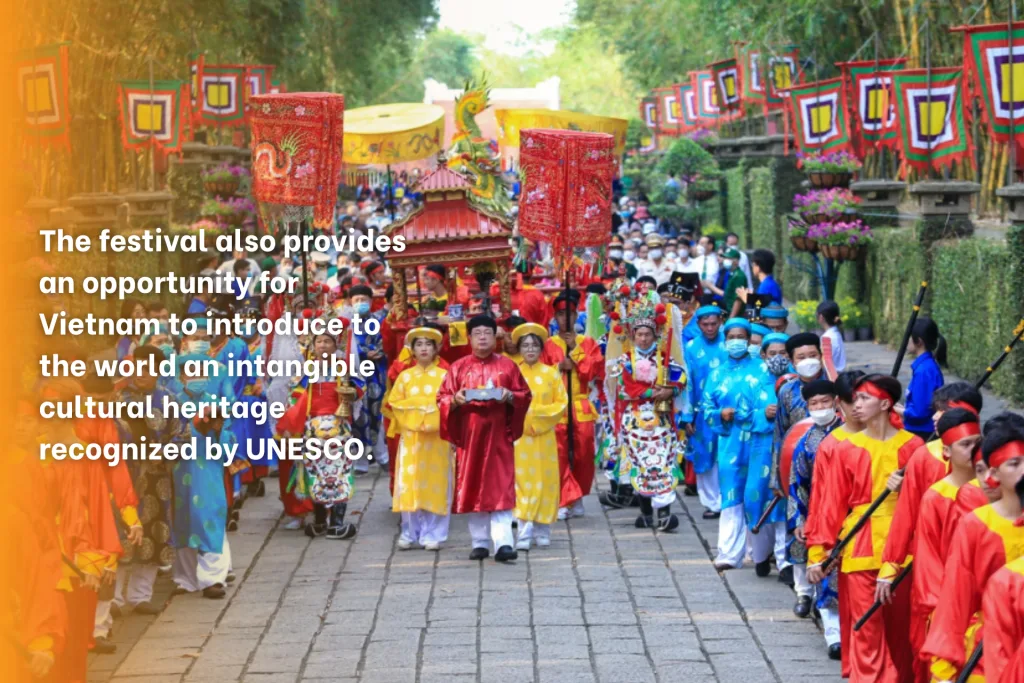
The festival also provides an opportunity for Vietnam to introduce to the world an intangible cultural heritage recognized by UNESCO. It is a source of national pride, reflecting Vietnamese cultural identity and deep respect for ancestral origins.
Location and Festival Time
Location: Hung Kings Temple, Nghia Linh Mountain, Hy Cuong Commune, Viet Tri City, Phu Tho Province
Time: From the 1st to the 10th day of the third lunar month each year
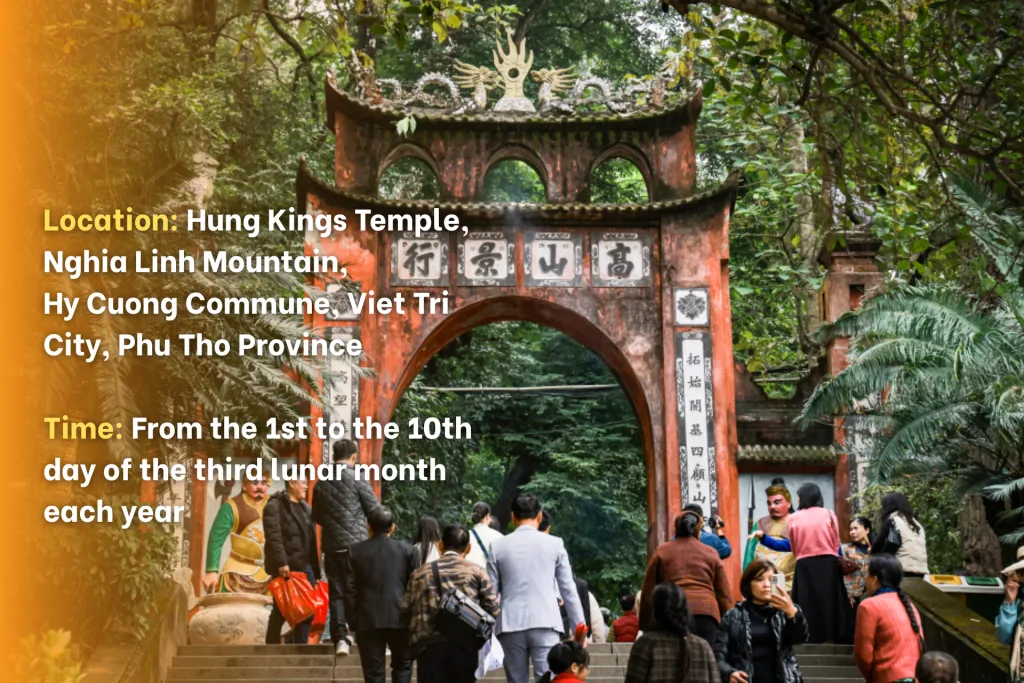
The Hung Kings Temple Festival takes place annually at the temple complex on Nghia Linh Mountain in Phu Tho Province. Although the official anniversary of the Hung Kings falls on the 10th day of the third lunar month, festival activities begin about a week earlier. The celebration concludes with the main procession and incense-offering ceremony at Thuong Temple on the 10th day of the third lunar month.
2. What Makes the Hung Kings Festival Special?
The Ceremonial Rituals
The ceremonial portion of the festival is conducted with great formality and grandeur, attended by national leaders, government officials, and respected representatives of local communities.
At the start of the ceremony, traditional “bat am” ceremonial music is performed. The chief officiant then recites prayers before the altar of the Hung Kings. Each recitation is followed by a sequence of drums and gongs. Afterward, the ceremonial procession advances toward the front hall to perform ritual bows before stepping back in order.
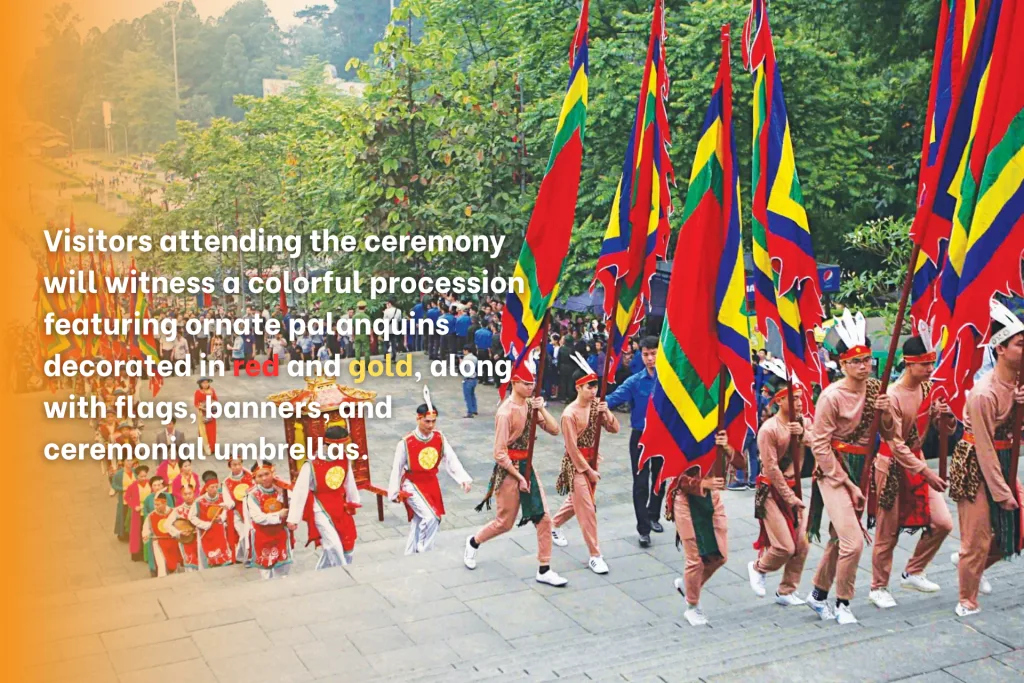
Visitors attending the ceremony will witness a colorful procession featuring ornate palanquins decorated in red and gold, along with flags, banners, and ceremonial umbrellas. These palanquins are carried by young men and women from local communities in traditional festival attire.
Key ritual events of the Hung Kings Temple Festival include:
- Lunar March 1-5: Incense-offering ceremonies by delegations from nearby districts and towns.
- Lunar March 6: Commemoration ceremony for the National Ancestor Lac Long Quan and an incense-offering ceremony honoring Au Co, regarded as the Mother Ancestor of the Vietnamese people.
- Lunar March 7: Local communities hold palanquin processions to the Hung Kings Temple complex.
- Incense offerings at temples and historical sites dedicated to the Hung Kings and other notable figures throughout Phu Tho Province.
- Main festival day (Lunar March 10): The Hung Kings’ Commemoration Day, including the principal incense-offering ceremony and tribute at the bas-relief monument depicting President Ho Chi Minh speaking with officers and soldiers of the Vanguard Army Division.
Festival Activities
In addition to formal ceremonies, the festival features a wide range of cultural activities.
Exhibitions of Hung Kings artifacts and historical materials
From the 1st to the 2nd day of the third lunar month, visitors can explore exhibitions at the Hung Kings Temple Museum and the historical site complex. These displays include artifacts, publications, and documents related to the Hung Kings and the traditional worship practices of local communities.
Traditional cultural performances
From the 6th to the 7th day of the third lunar month, the festival hosts performances of traditional Vietnamese folk arts in the Hung Kings Temple area. These include bronze drum performances, Xoan singing, traditional “dam duong” percussion rituals, and water puppet shows.
Traditional competitions and community activities
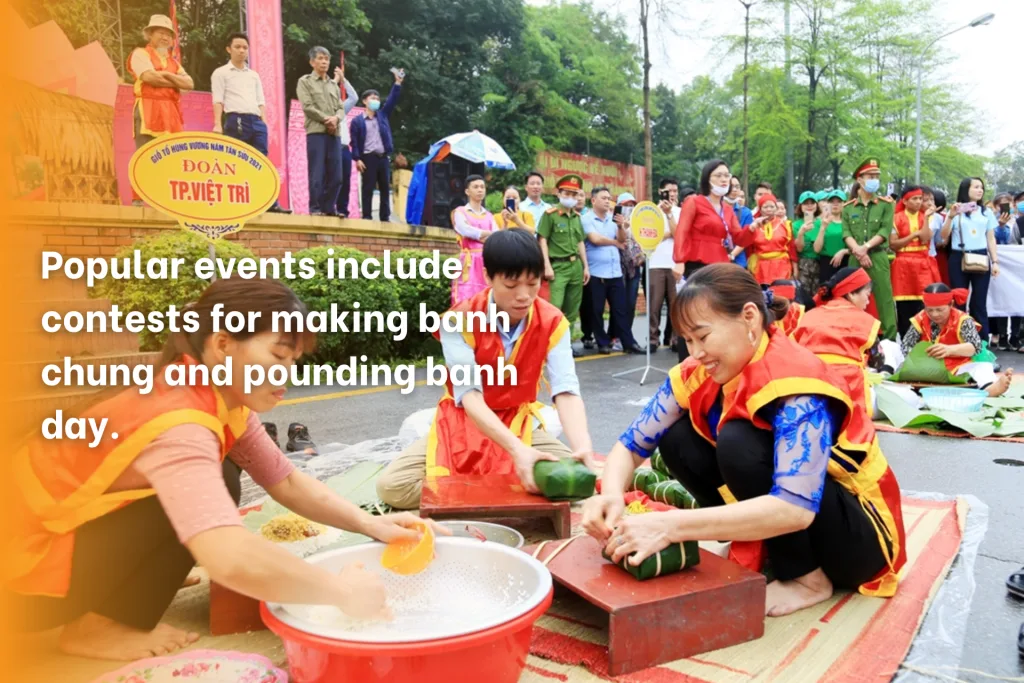
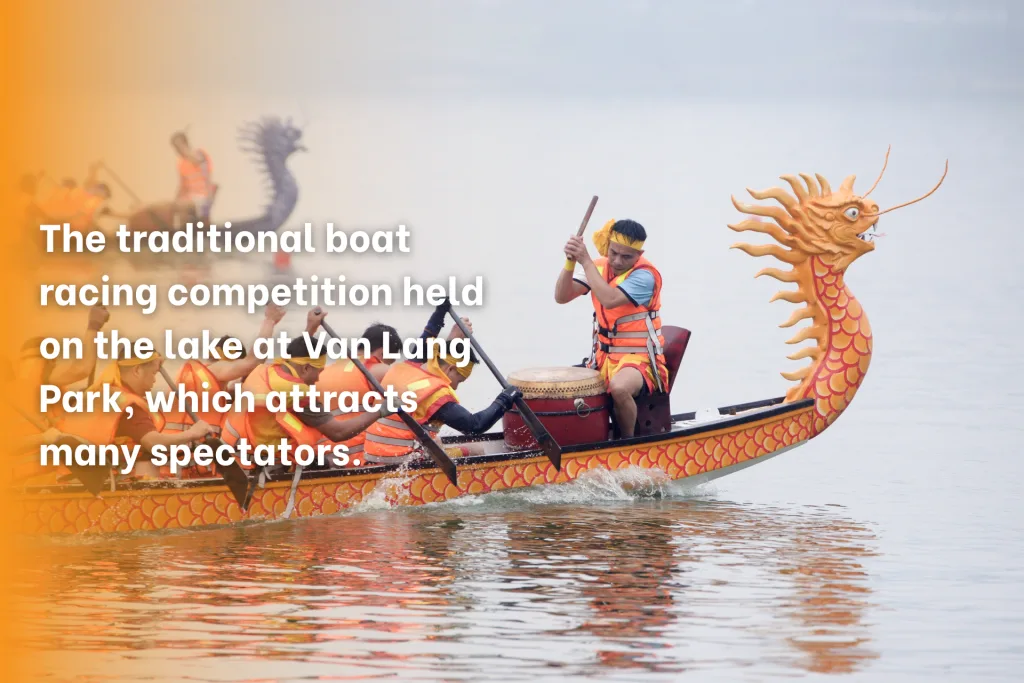
On the 8th and 9th days of the third lunar month, visitors can enjoy lively competitions that reflect Vietnam’s cultural heritage. Popular events include contests for making banh chung (square sticky rice cake) and pounding banh day (round glutinous rice cake). Another highlight is the traditional boat racing competition held on the lake at Van Lang Park, which attracts many spectators.
For visitors who enjoy vibrant festival atmospheres, these activities are among the most exciting parts of the celebration.
3. Travel Tips for Visiting the Hung Kings Temple Festival
If you are planning a pilgrimage to Hung Kings Temple during the festival, the following practical tips may help make your visit easier.
Getting There
From Hanoi, travelers can reach Hung Kings Temple by several routes:
- Pham Van Dong – Nam Thang Long – Vinh Phuc – Viet Tri – Hung Kings Temple
- Route 32 via Ho Tung Mau – Son Tay – Phu Tho
- Thang Long Boulevard – Son Tay – National Highway 32 – Phu Tho – Hung Kings Temple
Dress Code
Visitors should wear modest and respectful clothing when attending the festival. Comfortable walking shoes or soft-soled sneakers are recommended, as the temple complex involves considerable walking and climbing.
Preparing Offerings
If you wish to participate in the incense-offering ritual, you may prepare offerings at home or purchase them in Viet Tri City. Typical offerings include banh chung, banh day, vegetarian offerings, fruits, tea, ceremonial cakes, or traditional foods such as chicken, pork, and Vietnamese cold cuts.
Safety Tips
The Hung Kings’ Commemoration Festival attracts very large crowds each year. Visitors should take care of their personal belongings to avoid loss or theft. Assistance stations are available within the heritage site to help visitors locate lost items or reunite with companions.