Discover the Thang Long Four Sacred Temples, a historic spiritual complex in Hanoi that reflects the city’s cultural beliefs and ancient traditions.
The Thang Long Four Sacred Temples is an architectural complex deeply rooted in the history, culture, and spirituality of Hanoi. Each temple within this group carries its own distinct beauty and fascinating legends. Below is a closer look at what makes this spiritual heritage site so unique.
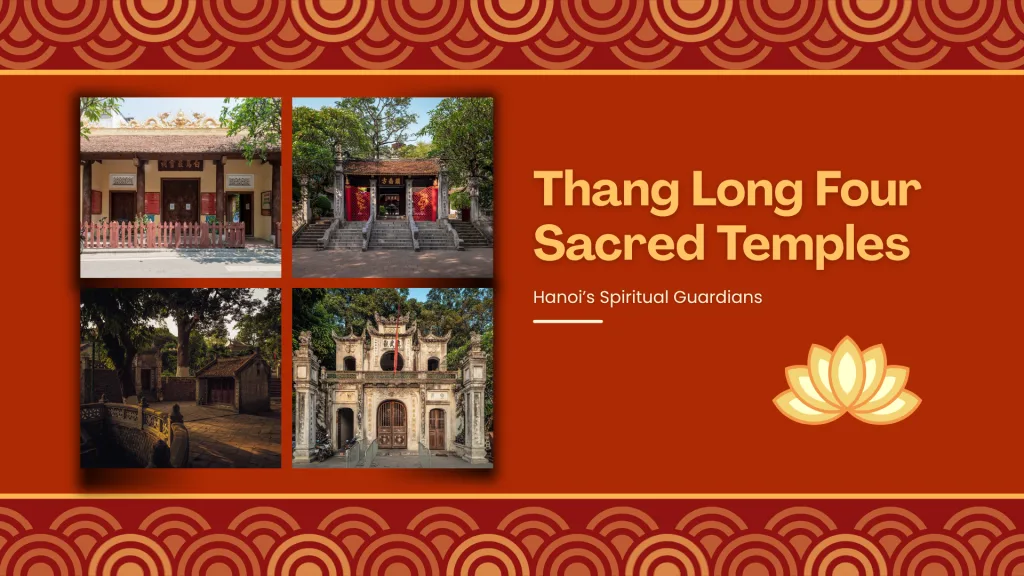
Overview of the Thang Long Four Sacred Temples
Contents
Closely tied to the formation and development of the capital, the Thang Long Four Sacred Temples are considered a cultural and spiritual symbol of Hanoi.
What Are the Thang Long Four Sacred Temples?
The name “Thang Long Four Sacred Temples” refers to a group of four ancient and revered temples:
- Bach Ma Temple
- Voi Phuc Temple
- Kim Lien Temple
- Quan Thanh Temple
Each temple is dedicated to a different deity believed to guard one direction, protecting the ancient capital of Thang Long and modern-day Hanoi with peace and prosperity. Together, these four temples symbolize patriotism and the resilience of the people of Hanoi.
Location and Connection Between the Temples
The temples were strategically built around the ancient Thang Long Citadel, forming a protective circle:
- Bach Ma Temple: East
- Voi Phuc Temple: West
- Kim Lien Temple: South
- Quan Thanh Temple: North
This arrangement reflects traditional feng shui principles, representing harmony between humans and nature as understood by early Vietnamese people. Each temple is also associated with legends linked to the construction and protection of the Thang Long citadel.
Together, they form a unified spiritual complex rather than four isolated sites, symbolizing unity and collective strength in safeguarding the nation.
The Four Temples of Thang Long
Each temple possesses its own unique architecture, history, and legends.
Bach Ma Temple – The Eastern Guardian
- Address: 76 Hang Buom Street, Hoan Kiem District, Hanoi
- Festival: 12th-13th day of the 2nd lunar month
Built in the 9th century, Bach Ma Temple is dedicated to Long Do, the guardian deity of the land. According to legend, in 1010, King Ly Thai To attempted to build the Thang Long citadel, but the structure repeatedly collapsed. After praying at this temple, the king received guidance from a white horse spirit, which showed him where to build successfully.
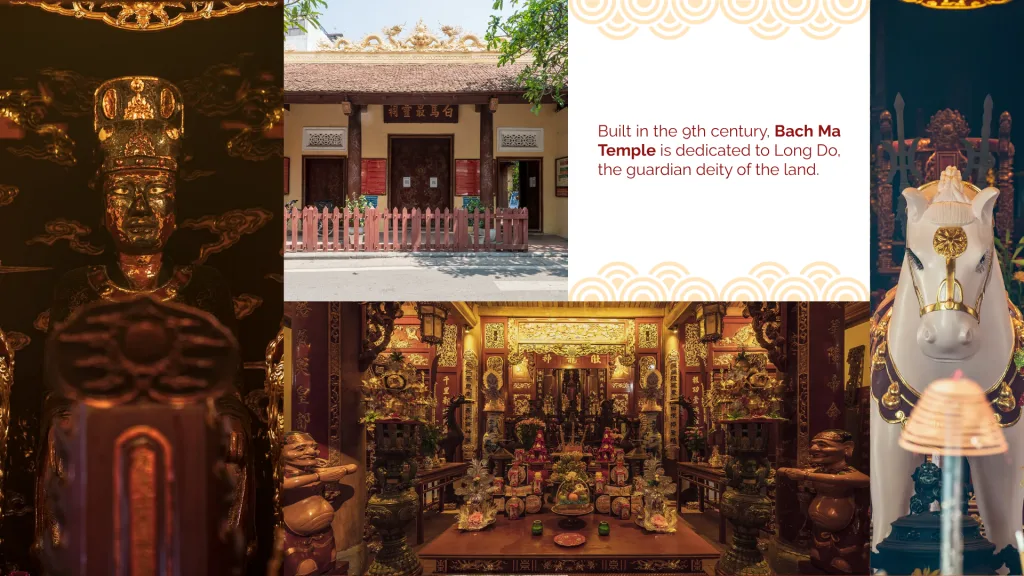
The temple preserves many valuable artifacts, including ancient plaques, ceremonial objects, weapons, and stone steles. Intricate carvings decorate wooden beams and pillars throughout the structure.
During the annual festival, visitors can witness traditional offerings, participate in cultural activities, and enjoy folk performances. Locals attend to pray for prosperity, national stability, and happiness.
Quan Thanh Temple – The Northern Guardian
- Address: 190 Quan Thanh Street, Ba Dinh District, Hanoi
- Festival: 3rd day of the 3rd lunar month
Quan Thanh Temple is dedicated to Huyen Thien Tran Vu, a deity believed to have protected people by driving away evil spirits. The temple combines traditional Vietnamese architecture with refined sculpture.
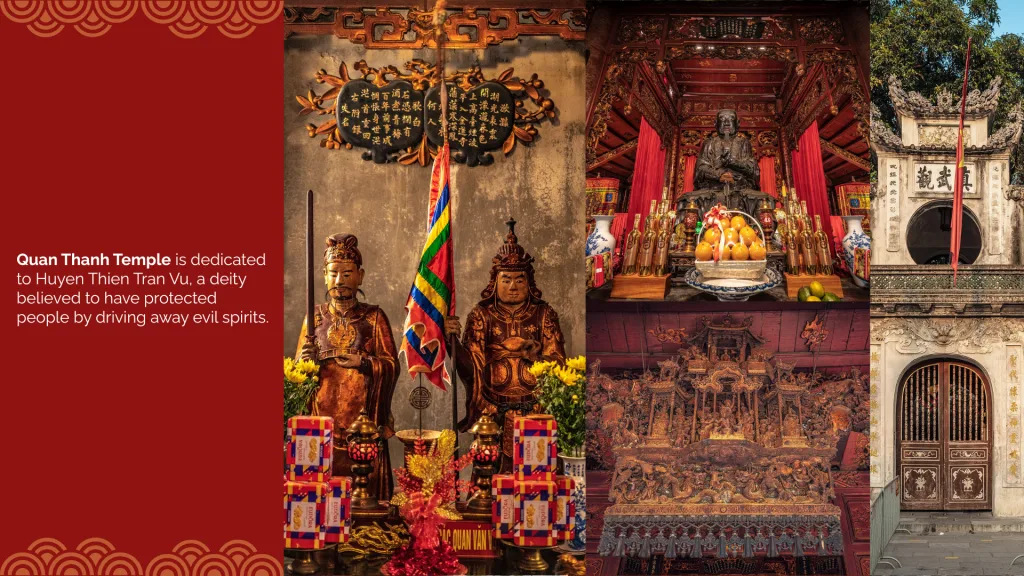
One of its highlights is a bronze statue of Tran Vu, recognized for its historical and artistic value.
The annual festival commemorates the deity’s birth, featuring traditional rituals, poetry events, and cultural performances.
Voi Phuc Temple – The Western Guardian
- Address: 306B Kim Ma Street, Ngoc Khanh, Ba Dinh District, Hanoi
- Festival: 9th-10th day of the 2nd lunar month
Voi Phuc Temple is associated with Prince Linh Lang, a talented general who defended the kingdom against the Song invaders. After his death in 1076 at the Cau River defense line, locals built a temple in his honor, and he was later titled Linh Lang Dai Vuong.
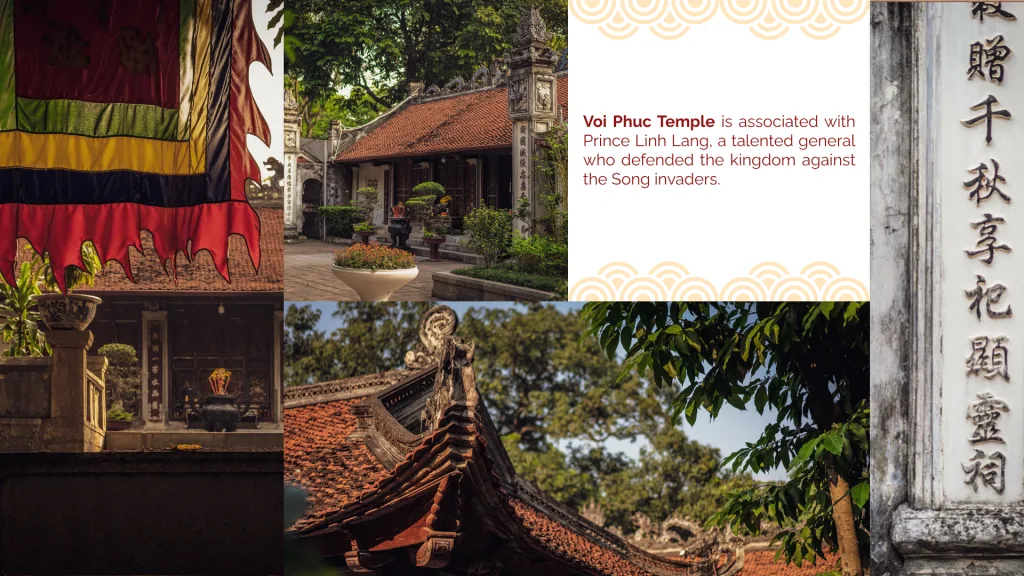
The name “Voi Phuc” (Kneeling Elephants) comes from the two kneeling elephant statues at the temple’s entrance. Located in the western part of the citadel, it is also known as the Western Guardian Temple.
Its solemn and ancient architectural style makes it a compelling destination for visitors.
Kim Lien Temple – The Southern Guardian
- Address: 176 Kim Hoa Street, Phuong Lien Ward, Dong Da District, Hanoi
- Festival: 16th day of the 3rd lunar month
Also known as Cao Son Temple, Kim Lien Temple is dedicated to Cao Son Dai Vuong, a deity associated with King Le Tuong Duc’s campaign to suppress rebellion.
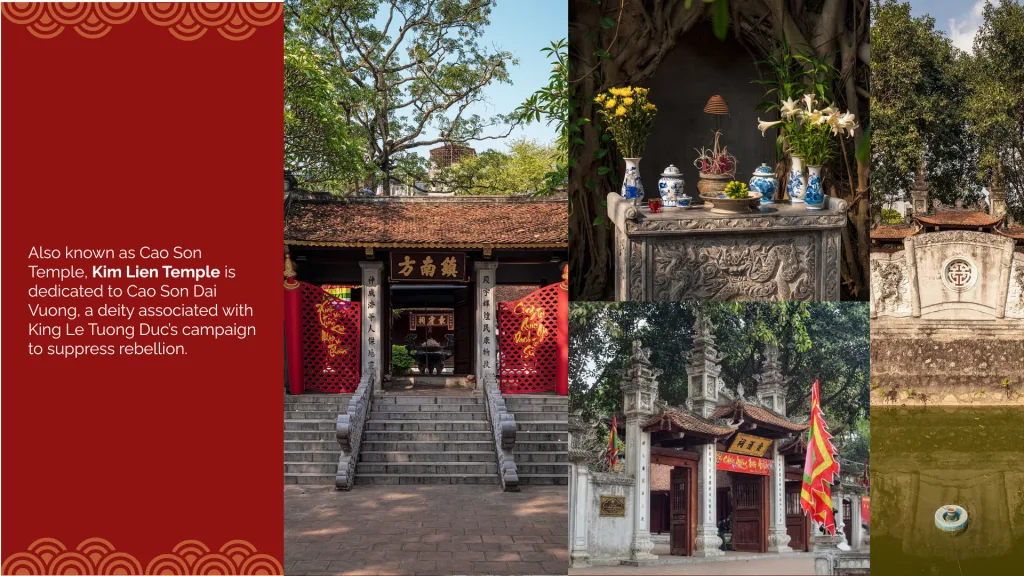
According to legend, in the 16th century, the king encountered an ancient temple inscribed with “Cao Son Dai Vuong” while passing through a forest in Phung Hoa district (now in Ninh Binh). He prayed for assistance and later rebuilt a larger temple in Thang Long to honor the deity.
The temple’s most important artifact is a stone stele titled “Cao Son Dai Vuong Than Tu Bi Minh,” inscribed in 1510 by historian Le Tung. It also houses 39 royal decrees honoring the deity.
Travel Experiences at the Thang Long Four Sacred Temples
The Thang Long Four Sacred Temples are not only historical and cultural landmarks but also attractive destinations for both domestic and international visitors.
Walking Between the Temples
Walking is one of the best ways to fully experience the charm of these sites. Strolling through the surrounding streets allows visitors to appreciate both the ancient architecture and the peaceful atmosphere, in contrast to the city’s busy pace.
Appreciating Architecture and Spiritual Space
From brick walls and curved tiled roofs to intricately carved wooden beams and altars, each temple showcases the craftsmanship and creativity of earlier generations. Worship objects and statues are carefully crafted and reflect strong folk cultural influences.
Inside the temples, visitors often experience a sense of calm and serenity. The quiet atmosphere, the sound of bells, and the subtle scent of incense create a sacred environment ideal for reflection.
Festivals at the Temples
Each temple hosts its own festival at different times of the year, offering visitors a chance to experience traditional cultural practices. During festivals, the temples become lively with rituals, ceremonies, and various entertainment activities.
Travel Tips for Visiting the Thang Long Four Sacred Temples
Best Time to Visit
Two ideal periods to visit are:
- Spring (February to April): Hanoi is filled with blooming flowers and pleasant weather. This is also festival season, offering rich cultural experiences.
- Autumn (September to November): The weather is cool and comfortable, perfect for walking and sightseeing.
Cultural and Practical Notes
Plan your itinerary carefully, ideally over one or two days, to optimize travel time between temples. Check opening hours in advance, as most temples are open from early morning to late afternoon.
Dress modestly and respectfully, avoiding revealing clothing. Comfortable footwear is recommended due to the amount of walking involved.
Bring essentials such as water, hats, sunscreen, and some cash for offerings or small expenses.
If you wish to burn incense or pray, learn basic rituals beforehand or ask temple caretakers for guidance. A commonly suggested visiting order is: East (Bach Ma) → West (Voi Phuc) → South (Kim Lien) → North (Quan Thanh), though this can be adjusted based on your schedule.
Transportation
Located within central Hanoi, the temples are easily accessible by public transportation such as buses or by private vehicles like motorbikes and cars. Walking between nearby sites is also a rewarding way to enjoy the area’s peaceful atmosphere.
The Thang Long Four Sacred Temples represent a unique complex of historical, cultural, and spiritual significance, reflecting the traditions and values of the people of Thang Long – Hanoi. Exploring these temples offers visitors a chance to immerse themselves in a tranquil spiritual space while connecting with Vietnam’s rich cultural heritage.