Văn Miếu – Quốc Tử Giám in Hanoi is Vietnam’s first university, preserving Confucian education, history, and architecture for over 900 years.
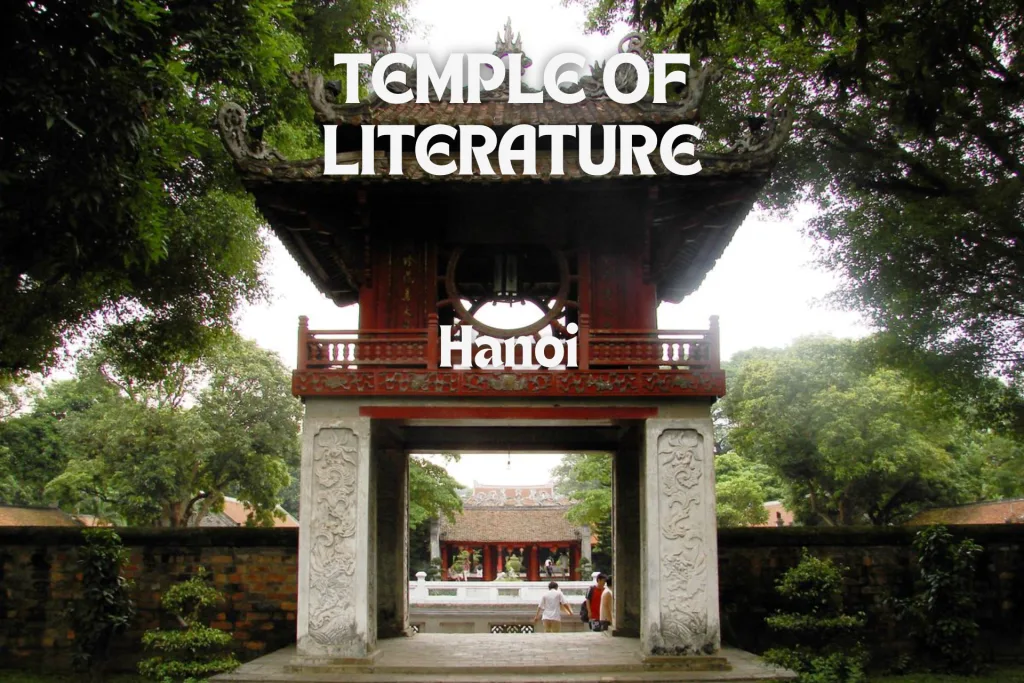
Văn Miếu – Quốc Tử Giám is a historic complex that symbolizes the development of Vietnamese culture and affirms the nation’s long-standing tradition of respect for learning. The site preserves important cultural and historical imprints of Hanoi, the thousand-year-old capital of Vietnam. If you are visiting Hanoi and wondering where to go, Văn Miếu – Quốc Tử Giám is a destination not to be missed.
1. Overview of Văn Miếu – Quốc Tử Giám
Văn Miếu – Quốc Tử Giám is a historical architectural complex located at No. 58 Quốc Tử Giám Street, Văn Miếu – Quốc Tử Giám Ward, Hanoi. The site is laid out symmetrically, with successive courtyards arranged along a north-south axis, following the traditional planning of Confucian temples dedicated to Confucius.
The complex is bordered by streets on all four sides: Quốc Tử Giám Street to the south, Nguyễn Thái Học Street to the north, Tôn Đức Thắng Street to the west, and Văn Miếu Street to the east. It covers a total area of 54,331 square meters.
This was Vietnam’s first national academy, where many generations of talented scholars were educated. Today, Văn Miếu – Quốc Tử Giám is one of Hanoi’s most popular attractions for both domestic and international visitors. It is also a place where students often come to pray for good fortune before important examinations.
2. Transportation and How to Get There
Visitors can choose various means of transportation to reach Văn Miếu – Quốc Tử Giám, depending on their itinerary and preferences:
- Private vehicles: From Hoàn Kiếm Lake, you can travel via Tràng Thi, Nguyễn Khuyến, and Hai Bà Trưng streets. Parking is available near the entrance at No. 58 Quốc Tử Giám Street.
- Public buses: Several bus routes stop near Văn Miếu, including routes No. 02 (Bác Cổ – Yên Nghĩa Bus Station), No. 23 (Nguyễn Công Trứ circular route), No. 32 (Giáp Bát Bus Station – Nhổn), No. 38 (Nam Thăng Long – Mai Động), and No. 41 (Nghi Tàm – Giáp Bát Bus Station).
- Ride-hailing services: Visitors can book cars or motorbikes through smartphone apps such as Grab, Xanh SM, or Bee.
You have two options for visiting the Temple of Literature:
Day Tour: Offers a better view of the monuments and architecture, providing ample time to explore the details.
- Opening Hours: 7:30 AM – 6:00 PM
- Ticket Price: 30,000 VND (~$1.25 USD)
Night Tour: Captivating and vibrant with 3D mapping art performances.
- Opening Hours: 6:30 PM – 10:30 PM
- 3D Mapping Showtimes: 7:45 PM & 8:45 PM
- Ticket Prices: Adults – 199,000 VND (~$8.25 USD), Children (1m-1.3m) – 99,000 VND (~$4.10 USD)
3. History of Formation and Development
Văn Miếu was constructed during the reign of King Lý Thánh Tông in August 1070. It served both as a temple honoring Confucian sages and as a royal school for the Crown Prince. Prince Lý Càn Đức, later known as King Lý Nhân Tông, was the first student to study here.
After ascending the throne, King Lý Nhân Tông established Quốc Tử Giám next to Văn Miếu. Initially, this academy was reserved exclusively for the children of royalty and high-ranking officials. In 1253, under King Trần Thái Tông, it was renamed Quốc Học Viện and began admitting talented students from common families.
Between 1300 and 1357, during the reign of King Trần Minh Tông, the renowned scholar Chu Văn An was appointed as Quốc Tử Giám Tư Nghiệp, a position equivalent to today’s school principal. He oversaw academic activities at the academy and taught Crown Prince Trần Vượng.
4. Notable Structures within Văn Miếu – Quốc Tử Giám
Văn Miếu Gate (Văn Miếu Môn)
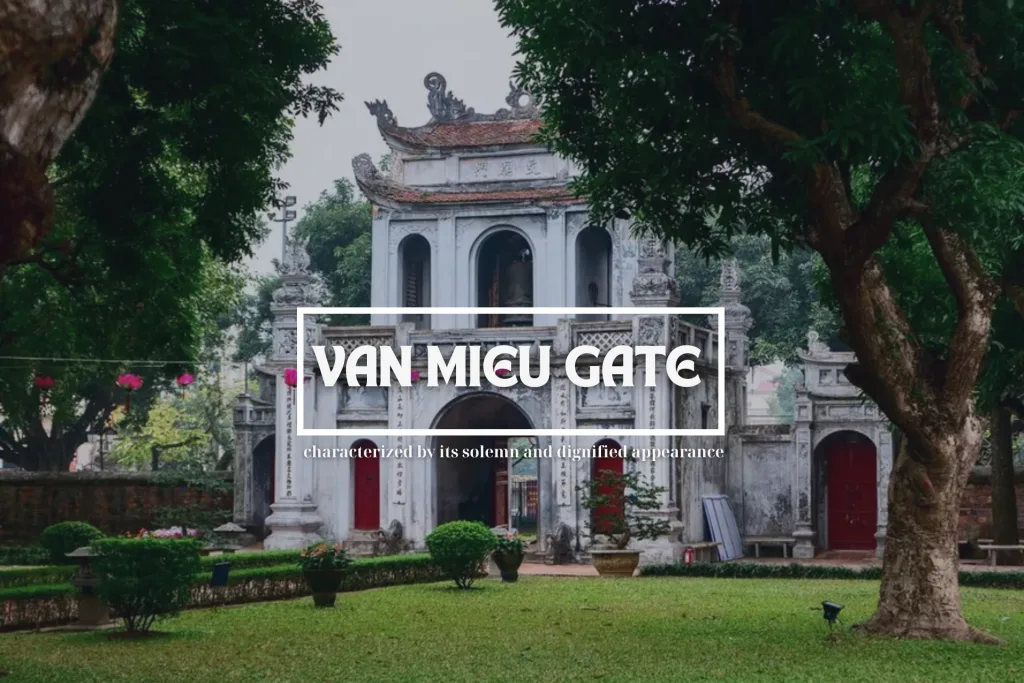
Văn Miếu Gate is the outermost three-entrance gate of the complex, characterized by its solemn and dignified appearance. The structure consists of three doorways and two levels. The upper level bears the inscription “Văn Miếu Môn” in ancient Chinese characters. In front of the gate are two stone steles placed on either side, along with ceremonial pillars positioned at the center.
Văn Chương Lake and Giám Garden
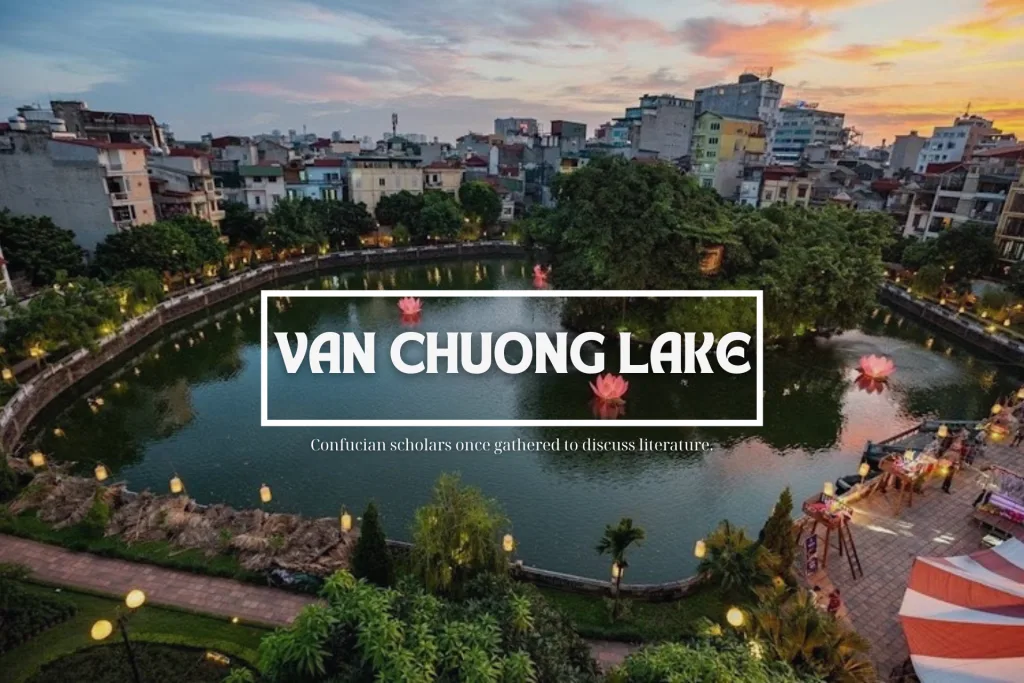
In front of Văn Miếu lies Văn Chương Lake, formerly known as Thái Hồ. The lake is notable for its large surface area and central islet called Kim Châu. On this islet stands Phán Thủy Pavilion, where Confucian scholars once gathered to discuss literature.
Giám Garden is located along the western wall of the complex. It features an octagonal pavilion, ornamental plants, ponds, and various landscaped elements. The garden serves as a place for sightseeing, relaxation, and cultural activities.
Đại Trung Gate
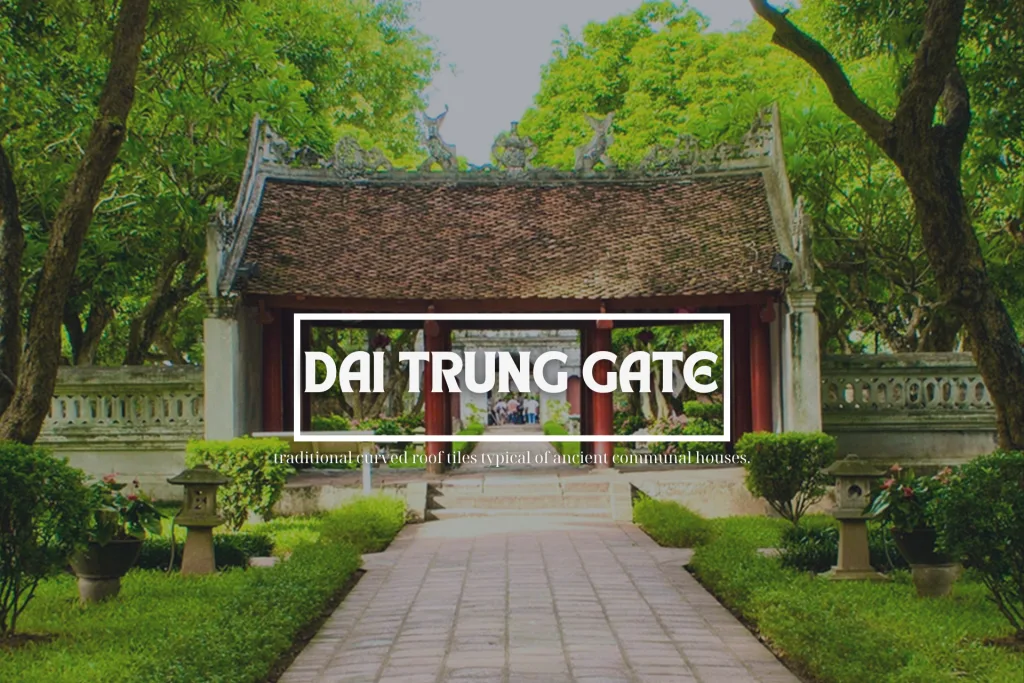
Đại Trung Gate is the second main gate of the complex. It consists of three bays and is built on a raised brick platform, with traditional curved roof tiles typical of ancient communal houses. The spacious grounds before and behind the gate, with parallel walkways, greenery, and water features, create a tranquil atmosphere rarely found in the bustling city of Hanoi.
Khuê Văn Pavilion (Khuê Văn Các)
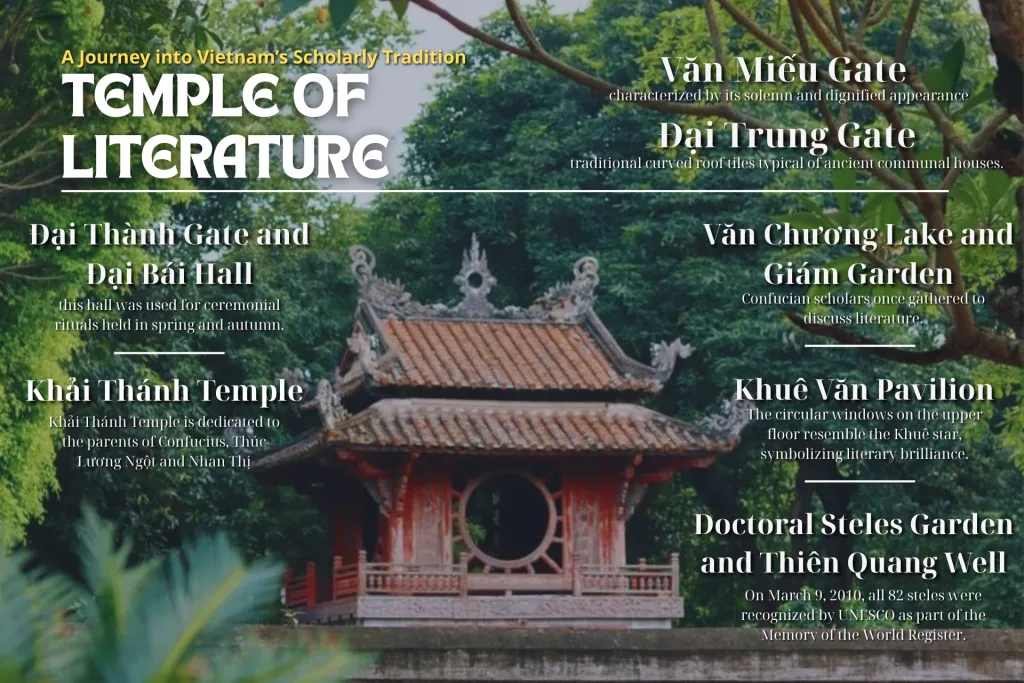
Khuê Văn Pavilion was built in 1805 by Governor-General Nguyễn Văn Thành during the Nguyễn Dynasty. It is a square pavilion with eight roofs, nearly nine traditional units in height, featuring four upper and four lower roofs. The pavilion stands on a square base measuring approximately 6.8 meters on each side and is admired for its distinctive and refined architectural style.
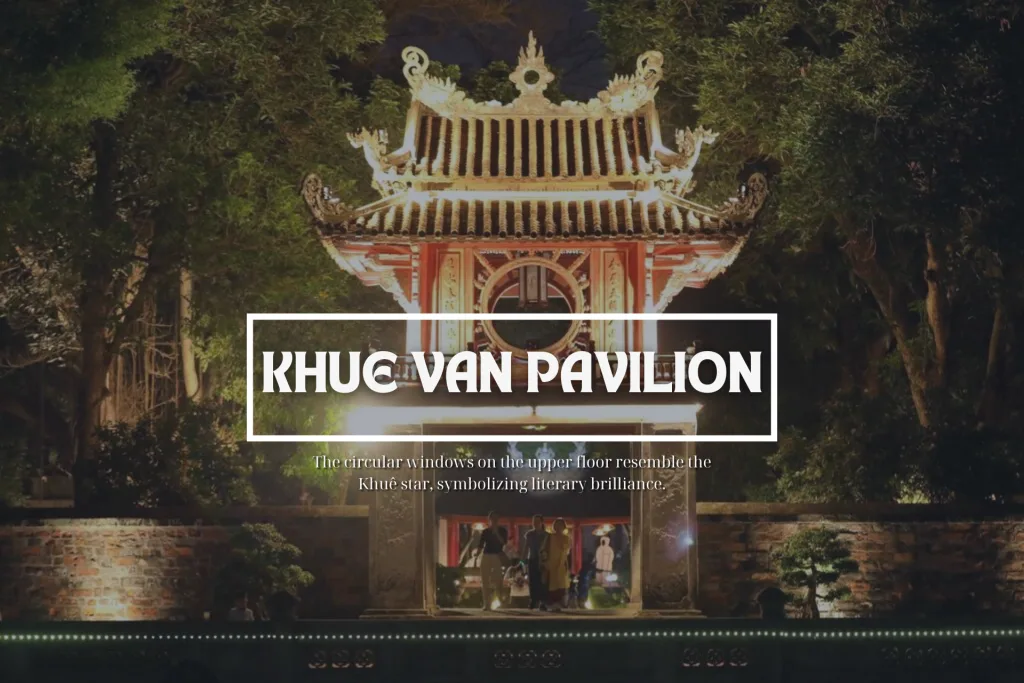
The upper level is lacquered in red and gilded with gold, with two layers of bright red tiled roofs. The lower level consists of four intricately carved square brick pillars. The circular windows on the upper floor resemble the Khuê star, symbolizing literary brilliance.
Doctoral Steles Garden and Thiên Quang Well
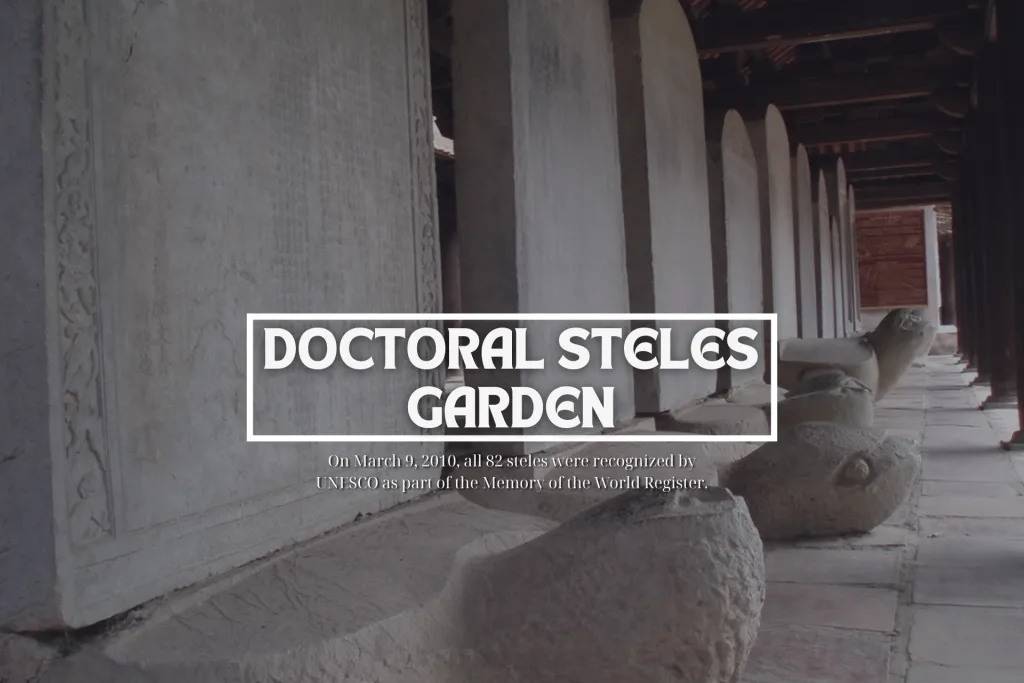
The garden of doctoral steles is a highlight of any visit to Văn Miếu – Quốc Tử Giám. The 82 stone steles are finely carved works of art with deep spiritual significance. Each stele is mounted on the back of a stone turtle and records the names and achievements of top laureates from various dynasties. On March 9, 2010, all 82 steles were recognized by UNESCO as part of the Memory of the World Register.
Thiên Quang Well, also known as the Literary Pond, is located behind Khuê Văn Pavilion and beside the stele garden. The square-shaped well symbolizes the earth and was designed to reflect the essence of the universe, illuminating human knowledge.
Đại Thành Gate and Đại Bái Hall
Within the complex, Đại Thành Gate has a structure similar to Đại Trung Gate. Passing through it, visitors enter a large courtyard paved with Bát Tràng bricks, leading to Đại Bái Hall, the central worship area of Quốc Tử Giám.
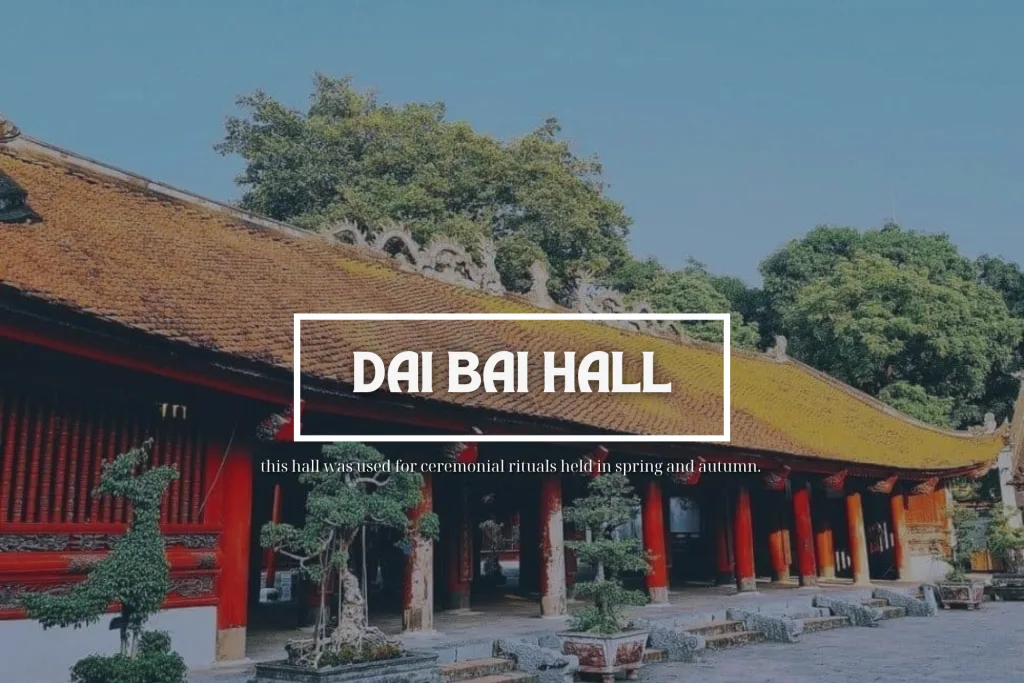
Đại Bái Hall consists of nine bays and is enclosed on three sides. Only the central bay contains an altar, while the remaining bays are left empty. Historically, this hall was used for ceremonial rituals held in spring and autumn.
Khải Thánh Temple
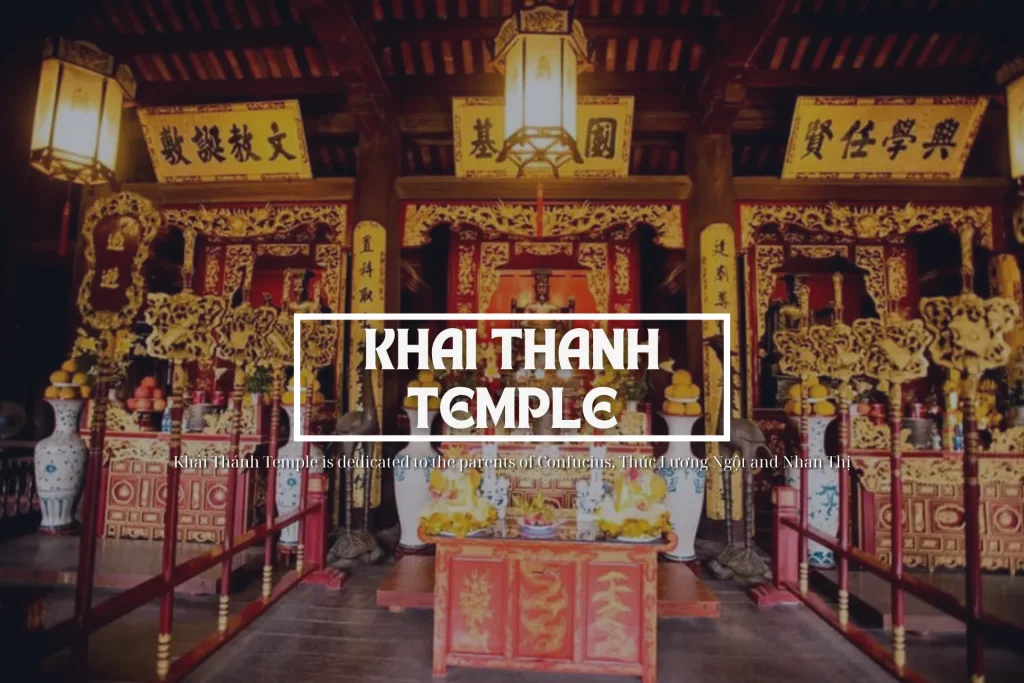
Located at the rear of the complex, Khải Thánh Temple is dedicated to the parents of Confucius, Thúc Lương Ngột and Nhan Thị. In the past, this area served as a residential complex with 150 rooms for students. In 1946, the structure was completely destroyed by French artillery. It was later reconstructed and preserved as seen today.
5. Experiencing Văn Miếu – Quốc Tử Giám: Returning to Vietnam’s Cultural Roots
Exploring Ancient Architecture and the History of Education
Visitors can begin their journey by admiring the ancient architecture and learning about Vietnam’s proud educational history. From the solemn Văn Miếu Gate, the path leads through Đại Trung Gate to Khuê Văn Pavilion. The 82 doctoral steles and Thiên Quang Well evoke the tradition of valuing learning and honoring talent across dynasties. Khải Thánh Temple and Đại Thành Gate serve both as worship spaces and exhibition areas, offering deeper insight into Confucian education, which produced many distinguished figures in Vietnamese history.
Experiencing Traditional Culture
Visitors can participate in several traditional activities, including:
- Calligraphy requests: During the first lunar month, calligraphers offer handwritten characters symbolizing luck, success, and academic achievement.
- Incense offering: Many students come to pray for success in examinations and future aspirations.
- Heritage education programs: Activities such as learning Chinese characters or making traditional books allow visitors to engage more deeply with the heritage.
- Cultural events: Seminars, exhibitions, themed displays, and traditional performances are regularly organized by the Văn Miếu – Quốc Tử Giám Cultural and Scientific Activities Center.
Photography in a Scholarly Setting
With its serene atmosphere and harmonious landscape, Văn Miếu – Quốc Tử Giám is a popular photography spot in Hanoi. Every corner offers an elegant backdrop, and photos taken here often reflect the site’s scholarly and historical spirit.
Participating in the Night Tour of Văn Miếu – Quốc Tử Giám
The night tour offers an immersive experience enhanced by lighting art and refined sound design. Activities such as folk games, storytelling through stone steles, and learning with traditional scholars help visitors understand the Confucian path of moral and intellectual cultivation. The highlight of the tour is the 3D mapping show “Tinh Hoa Đạo Học,” which honors respect for teachers, the tradition of learning, and the appreciation of talent in Vietnamese culture.
Opening Hours and Ticket Prices:
- Opening Hours: 6:30 PM – 10:30 PM
- 3D Mapping Showtimes: 7:45 PM & 8:45 PM
- Ticket Prices: Adults – 199,000 VND (~$8.25 USD), Children (1m-1.3m) – 99,000 VND (~$4.10 USD)
Souvenir Shopping
Within the complex, souvenir stalls offer meaningful items such as calligraphy artworks symbolizing good fortune, detailed models of Khuê Văn Pavilion, and other traditional handicrafts. These items represent the spirit of learning and wisdom and make thoughtful gifts for family and friends.
6. Important Notes for Visitors
To ensure a safe and respectful visit, visitors should keep in mind the following guidelines:
- Wear neat and respectful attire; hats should be removed.
- Smoking and bringing flammable or explosive materials into the site are prohibited.
- Light only one incense stick and do so in designated areas.
- Maintain cleanliness and a quiet atmosphere.
- Avoid superstitious practices or illegal activities.
- Do not damage artifacts or write on doctoral steles, turtle statues, or other exhibits.
- The 3D mapping show lasts approximately 20-30 minutes. Visitors are advised to arrive at least 60 minutes before the scheduled showtime. The organizers are not responsible for late arrivals.